
Tag: programming
-
ArtificialCast
ArtificialCast is a lightweight, type-safe casting and transformation utility powered by large language models. It allows seamless conversion between strongly typed objects using only type metadata, JSON schema inference, and prompt-driven reasoning.
-
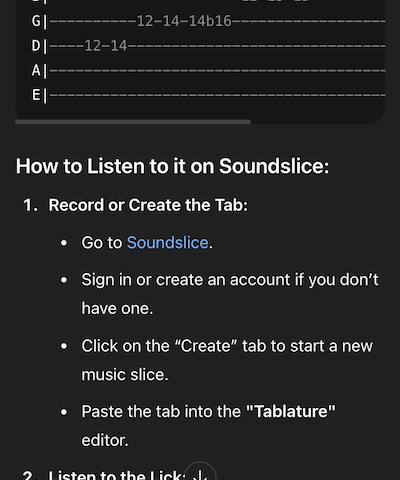
Adding a feature because ChatGPT incorrectly thinks it exists
ChatGPT lied about the functionality of Adrian Holovaty's software tool, Soundslice. So rather than try to get ChatGPT corrected, he just... implemented the feature it had claimed he already had. Is this the first time in history that this has happened? It could be!
-

Smug Interview Moment
Recently, I got to answer a technical interview question with "Coincidentally, I implemented exactly what you're describing two weeks ago. For fun. Can I show you the code and the blog post I wrote to explain my design choices?"
-
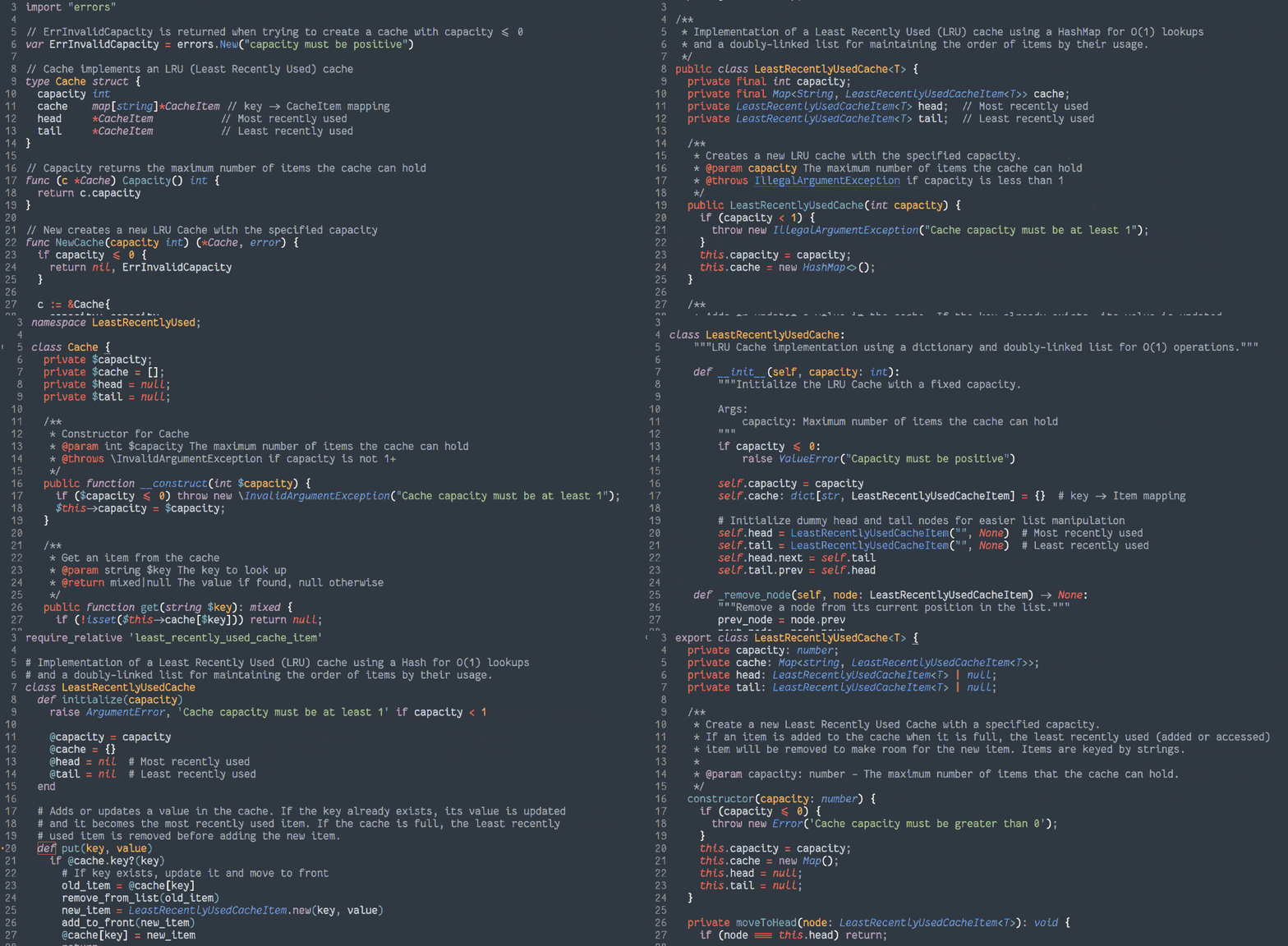
I Wrote the Same Code Six Times!
Could I rock an interview tech-test in a programming language I haven't touched in a decade? I wanted to know, so I found a tech-test... then solved it in six different programming languages in a single sitting.
-

Dynamic Filters in Pure CSS
CSS is powerful and performant. Let's implement client-side list filtering (with the user's choice of AND and OR modes) in CSS, without a line of JavaScript.
-
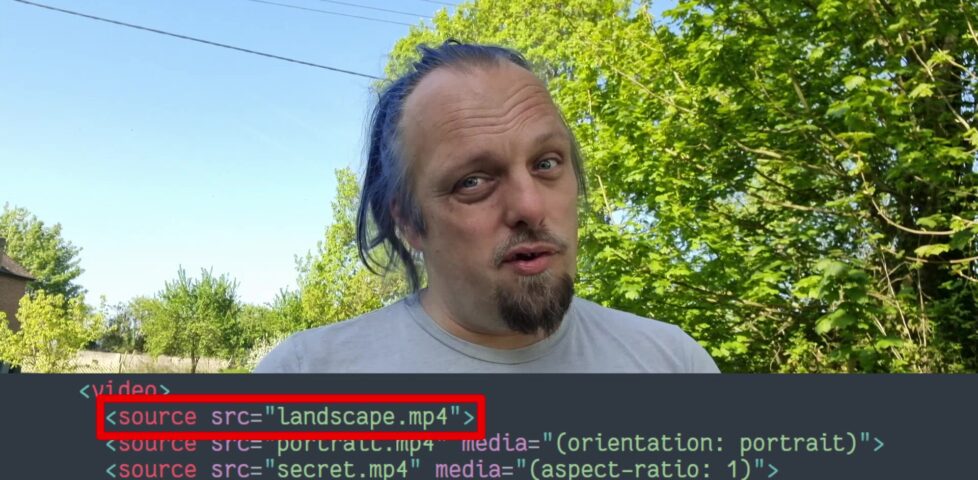
Variable-aspect adaptive-bitrate video... in vanilla HTML?
Thanks to recent browser enhancements, it's possible to show videos of different aspect ratios based on CSS media queries with no JavaScript dependencies. You can even combine it with adaptive bitrate streaming, even on static hosting. Let me show you how.
-
Reply to: Rant about claims that LLMs will make you lose your programming skills
Sérgio Isidoro said:
Ok, I'm NOT an immediate fan of "vibe coding" and overusing LLMs in programming. I have a healthy amount of skepticism about the use of these tools, mostly related to the maintainability of the code, security, privacy, and a dozen other more factors.
But some arguments I've seen from developers … -
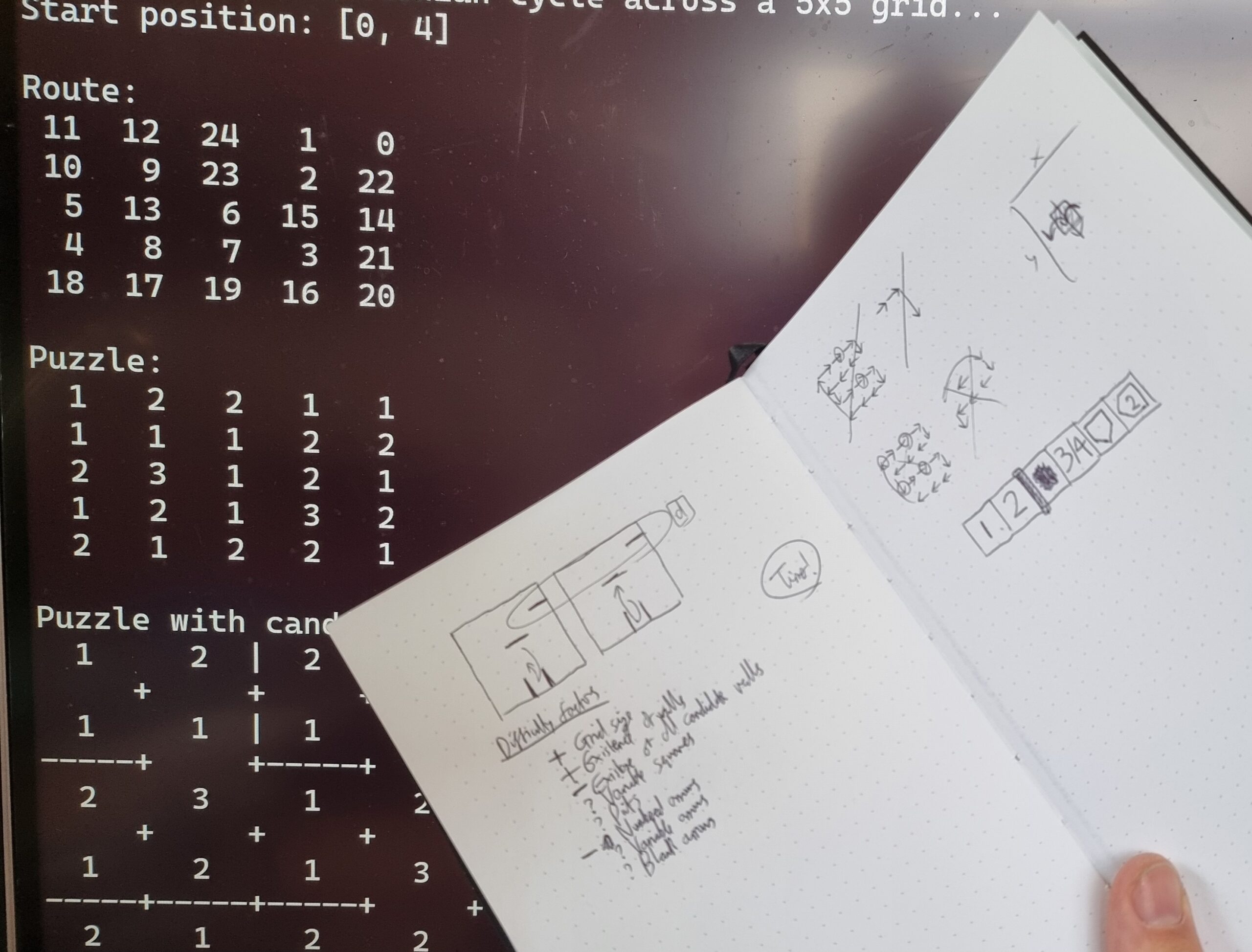
Possibly I'm a little late for the "casual daily puzzle game" party. (Did Wordle already get invented in this timeline; I forget?)
I think there's something in an idea I've been toying with. Bring on the weekend, when I can throw some brainpower at the frontend code!
Alt
A notebook is held in front of terminal output. The terminal begins with 'Start position: [0,4]' and then shows a series of 5×5 grids containing numbers: one, labelled 'Route:', shows random grid of the numbers 0 through 24; the second, labelled 'Puzzle:', contains 1s, 2s, and 3s, corresponding perhaps to the orthagonal distances between consecutive numbers from the first grid; the third, whose title is obscured by the notebook, shows the same thing again but with 'walls' drawn in ASCII art between some of the numbers. The notebook in front contains hand-drawn sketches of similar grids with arrows "jumping" around between them.
-
It's not cheating if you write the video game solver yourself
Robert Heaton wrote a solver to help him crack a puzzle in a video game, and I'm 100% behind this as a valid approach to playing single-player games, if it's more fun for you than the alternatives.
-
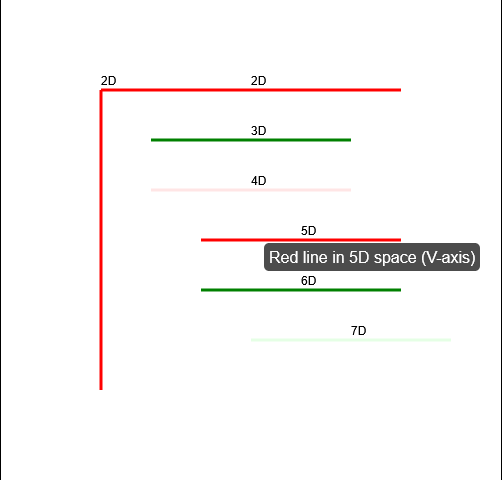
AI vs The Expert
Inspired by an 11-year old comedy sketch, I asked a GenAI to solve an unsolvable programming problem... and (for at least some models) it failed in exactly the way I anticipated: claiming to be able to solve it and delivering code that just... didn't. What does this teach us about AI trustworthiness for problems that might be solvable, but for which the human operator doesn't have sufficient comprehension to verify?
-
Generative AI use and human agency
Joanna Bryson's put together an absolutely fantastic list of considerations about the use of AI, and two of her points do a better job than I did at saying what I was trying to, last week.
-
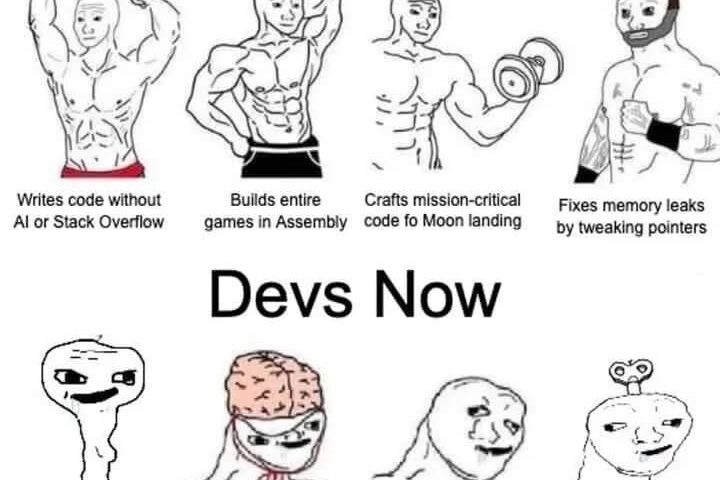
AI Is Reshaping Software Engineering — But There’s a Catch…
Eduaro Ordax is concerned that less-experienced developers will (be encouraged to) use AI as a crutch rather than learning programming fundamentals. I have similar and related concerns, and I'm still of the opinion that we just don't know how to teach people to program!
-

WordPress to ClassicPress
A few weeks ago I switched this blog to ClassicPress, a fork of WordPress. Here's a deep dive into how (and why) I did it, as well as a look into what my experience so-far has been with this (mostly-)cut-down version of the world's most popular CMS.
-
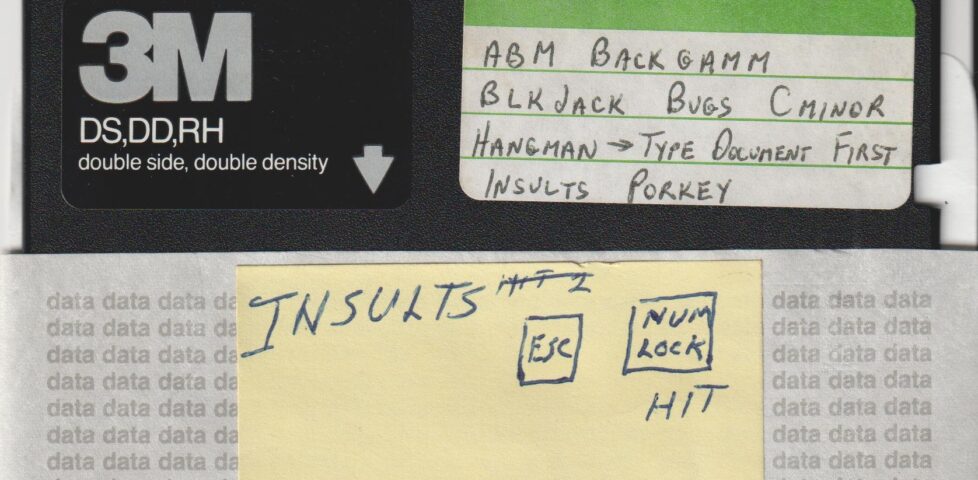
INSULTS.COM
As a kid, I enjoyed a 1983 program that dynamically generated insults. So I found a copy of it, reverse-engineered it, and reimplemented it in Perchance. Who wants to be insulted?
-
I have A Plan for today. Step #2 involves a deep-dive into Algolia search indexing, ranking, and priority, to understand how one might optimise for a diverse and complex dataset.
So obviously step #1 involves a big ol' coffee and a sugary breakfast. Here we go...

Alt
A wooden kitchen surface containing a red mug full of freshly-brewed coffee alongside a plate painted with fruits on which sits a heart-shaped doughnut, topped with chocolate and decorated with an iced motif of a sunflower. Beneath the plate, out-of-focus, are the pages of a news periodical.