Sid Meier’s Alpha Centauri[1] (which we fondly refer to here as SMAC,
both as an acronym and in reference to its potent addictive properties) opens in an odd way for a science fiction game. Most such games open with spaceships, star travel,
or some futuristic technology. They seek to hook the imagination. But our game begins much more humbly.
SMAC begins with a largely static image of the stars as a woman reads a passage from the book of Genesis, telling the story of man’s final and irrevocable expulsion from the Garden of
Eden. The reading goes on for about twenty seconds, which is long enough for the lack of action to be quite noticeable. The effect is that we, the players, are being
invited to join the woman in literary contemplation. This, in and of itself, is a strange thing to find in a game – and a strategy game, no less!
The attentive viewer will notice that as the woman ends her quotation, she cites her source as “The Conclave Bible, Datalinks”. Odd … one would normally expect chapter and verse
from a bible quote. What are the Datalinks? And which edition is the Conclave Bible?
There isn’t much time to dwell on those questions, though. As the woman finishes, the music strikes up and we are treated to a series of disjointed images from the Earth we
know. The context isn’t clear, but the message certainly is. These are scenes of chaos: fire; military equipment; rioting crowds; nuclear explosions; escalating debt –
each one flashes by just after it has time to register. The world is out of control. It’s literally on fire. And it’s hurtling toward calamity…
llustrating long-extinct creatures is difficult, but important work. With no living specimens to observe, it’s up to “paleoartists” who draw,
paint, or otherwise illustrate the creatures of prehistory as we think they might’ve been. Their work is the reason that when we talk about velociraptors, stegosaurs, or even woolly
mammoths, we have some idea of what they looked like.
But since all we have to go on are fossils, deciding how a dinosaur would have looked is as much art as it is science. And there’s at least one paleoartist who thinks we might be
getting things wrong…
Earlier this week, the Spanish government raided the Barcelona office of the PuntCat Foundation, the company that administers the .cat domain, and arrested one of its senior
executives.
PuntCat means “dot cat” in Catalan, the language spoken in the Catalonian region of Spain as well as places in France, Andorra, and Italy. The office was raided because Catalonia
hopes to hold a referendum on October 1 to decide if it should secede from Spain, and in an effort to quash the referendum, the government of Spain ordered puntCat to “block all .cat
domain names that may contain any kind of information about the forthcoming independence referendum,” according to a press release from the foundation.
This is an astonishing attempt at censorship by a member of the E.U. but, unfortunately, that aspect is going largely uncovered because the media is idiotically obsessed with cats…
Ever found you’ve accidentally entered too many gits in your terminal and wondered if there’s a solution to it? I quite often type git then go away and come
back, then type a full git status after it. This leads to a lovely (annoying) error out the box:
$ git git status
git: 'git' is not a git command. See 'git --help'.
What a git.
My initial thought was overriding the git binary in my $PATH and having it strip any leading arguments that match git, so we end up running just
the git status at the end of the arguments. An easier way is to just use git-config‘s alias.*
functionality to expand the first argument being git to a shell command.
git config --global alias.git '!exec git'
Which adds the following git config to your .gitconfig file
[alias]git=!exec git
And then you’ll find you can git git to your heart’s content
See what other git alias’ I have in my ~/.gitconfig, and laugh at all the typo corrections I
have in there. (Yes, git provides autocorrection if you enable it, but I’m used to these typos working!)
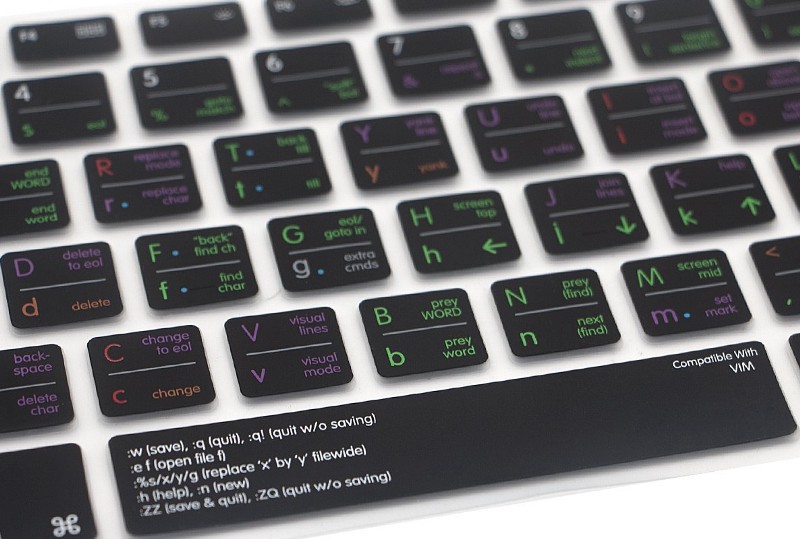
I often get asked about why I use Vim as my primary editor, there is no particular reason for this, except that I ended up learning it when I moved over to Linux full time many years
ago. I ended up liking it because I could edit my small source files on my quad-core machine without needing to wait forever for the file to open.
Sure Vim isn’t a bad editor, it’s highly extensible, it’s easy to shell out to the, err well shell, its everywhere so when you ssh into some obscure server you can just type vim (or
vi) and you’re good to go…
The day has arrived… our lovely little Not Dogs restaurant in the Bullring, Birmingham has had a little update – in fact, our additions are a nod to our festival background complete
with bunting and grass! Let’s go on a virtual tour…
Next year, 25 May looks like being a significant date. That’s because it’s the day that the European Union’s
general data protection regulation (GDPR)
comes into force. This may not seem like a big deal to you, but it’s a date that is already keeping many corporate executives awake at night. And for those who are still sleeping
soundly, perhaps it would be worth checking that their organisations are ready for what’s coming down the line.
First things first. Unlike much of the legislation that emerges from Brussels, the GDPR is a regulation rather than a directive. This means that it becomes law in all EU countries at
the same time; a directive, in contrast, allows each country to decide how its requirements are to be incorporated in national laws…
In a potato field near the Netherlands’ border with Belgium, Dutch farmer Jacob van den Borne is seated in the cabin of an immense harvester before an instrument
panel worthy of the starship Enterprise.
From his perch 10 feet above the ground, he’s monitoring two drones—a driverless tractor roaming the fields and a quadcopter in the air—that provide detailed readings on soil
chemistry, water content, nutrients, and growth, measuring the progress of every plant down to the individual potato. Van den Borne’s production numbers testify to the power of this
“precision farming,” as it’s known. The global average yield of potatoes per acre is about nine tons. Van den Borne’s fields reliably produce more than 20.
That copious output is made all the more remarkable by the other side of the balance sheet: inputs. Almost two decades ago, the Dutch made a national commitment to sustainable
agriculture under the rallying cry “Twice as much food using half as many resources.” Since 2000, van den Borne and many of his fellow farmers have reduced dependence on water for
key crops by as much as 90 percent. They’ve almost completely eliminated the use of chemical pesticides on plants in greenhouses, and since 2009 Dutch poultry and livestock
producers have cut their use of antibiotics by as much as 60 percent…