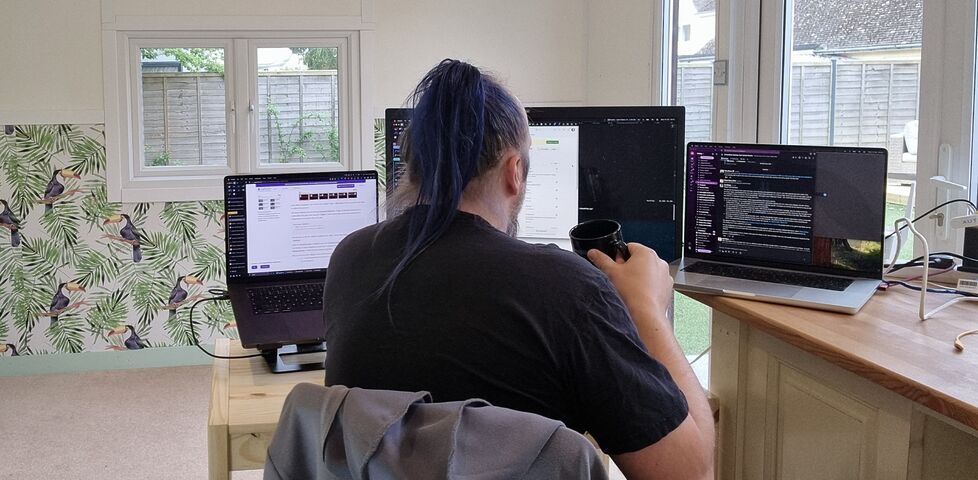
Now that we’ve finished our move into the Chicory House, I have for the first time in over two months been able to set up my preferred coding environment… with a proper monitor on a proper desk with a proper office chair. Bliss!
Tag: houses
Chicory Keys
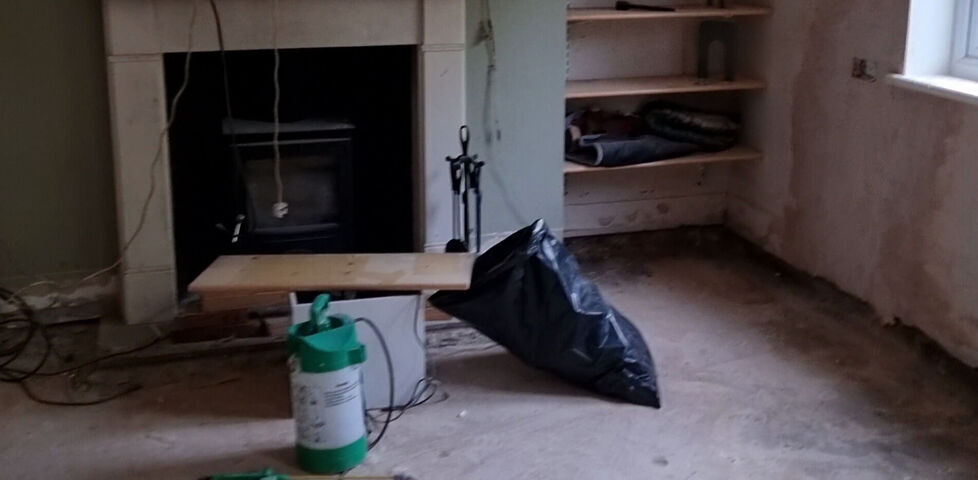
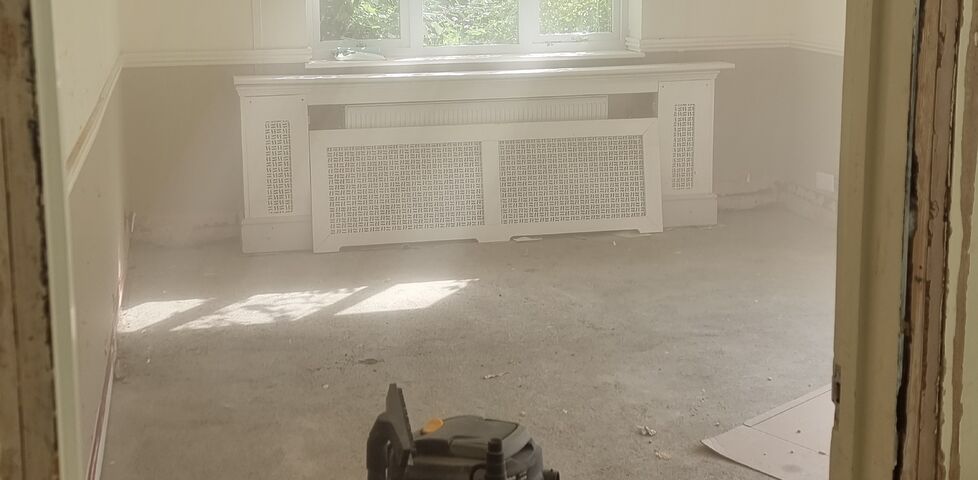
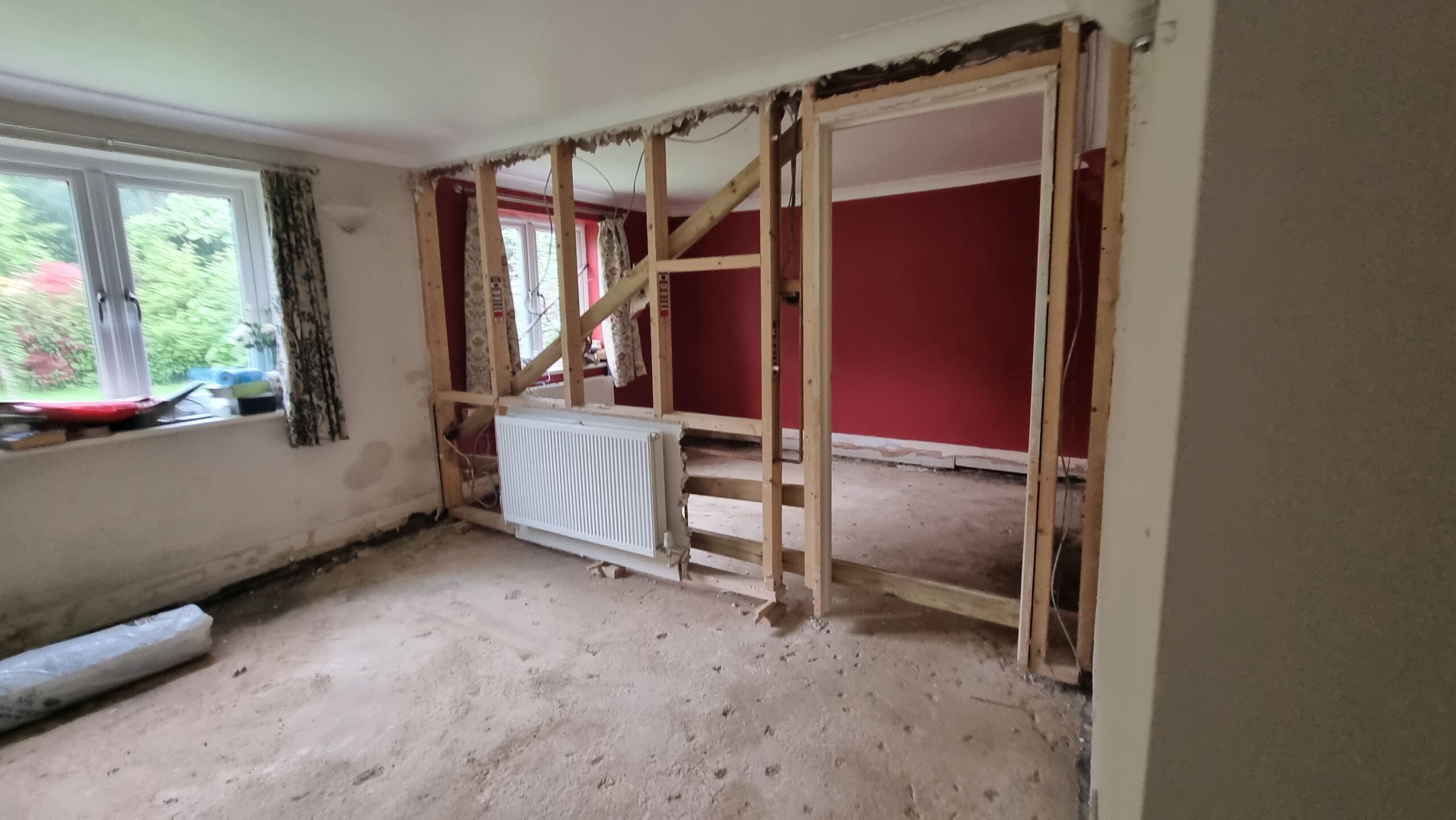
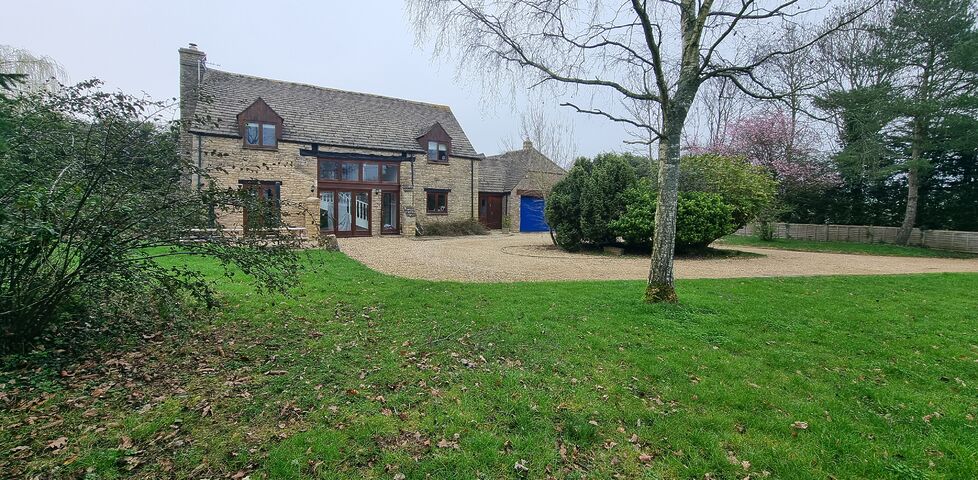
Towards the end of last week we picked up the keys to the Chicory House.1 We’ve now officially moved in to the place we’ll be calling home for the next six months or so, while we wait for our Actual House to be repaired following our catastrophic flood in February.2
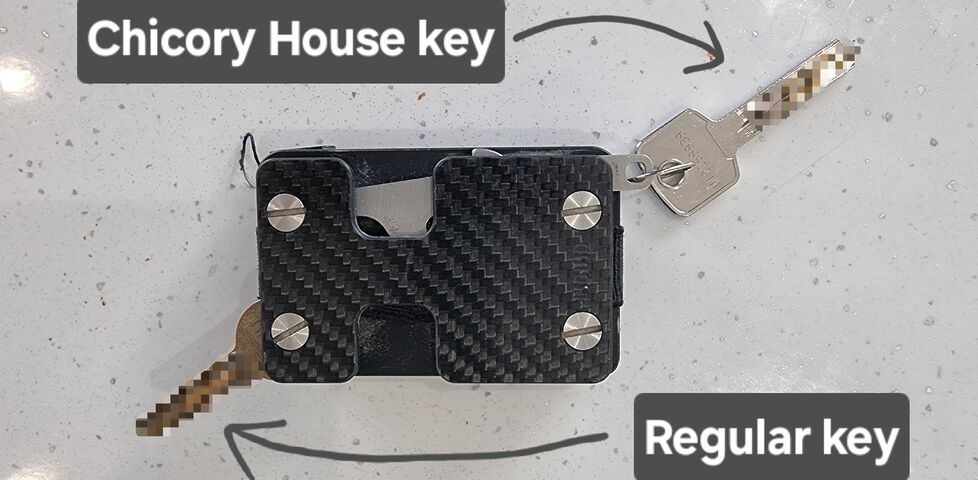
As part of my efforts to travel light, I use a pretty small wallet – a lump of carbon fibre about the size of a deck of cards3 that contains my ID, bank cards, and – in pocket at the back – my essential keys. Typically that’s my front door key and my bike lock key.
And so when I received my front door key to the Chicory House, I had to decide: where does this key belong?
The obvious answer would have been to remove the front door key for my actual home from its special place within my wallet and replace it with the Chicory House’s front door key. That’s the one I’ll need most-often for the foreseeable future, right? My regular front door key can move to the supplementary hook, on a ring, and/or be removed entirely and taken with me only when I need to visit my uninhabitable home.
But that’s not what I did.
This made sense as an instinctive move: it’s where I’d clip on the key to any of the half-dozen or so AirBnBs I’ve lived in for the last couple of months, after all! But for a house I’m going to live in for half a year or more it doesn’t seem so rational.
But I haven’t put it back. I think I’m keeping it this way. My regular key gets to keep its special spot because it represents the lost status quo and the aspiration to return. Sure, it’s less-practical for me to keep it there, but its position is symbolic, not sensible.
Swapping the two over would feel like giving in: like caving to the inevitability of us being out of our home for an extended period. Keeping the key where it is means that every time I put my hand in my pocket I’m reminded that the current arrangement is temporary; things will go back to normal. And that’s nice.4
Footnotes
1 The house isn’t actually called that, of course. That’s our nickname for it, on account of it being a substitute for the real thing.
2 The flood was exactly two months ago today, which makes today “F-Day plus 60”. We’ve spent most of the intervening time hopping from AirBnB to AirBnB.
3 As somebody who often carries a deck of cards, this is a pretty-convenient size to me!
4 That said, the Chicory House is way better than most of the AirBnB’s we’ve been living in, and I’m especially loving being able to sleep on my own familiar mattress again! While I wouldn’t want to live here forever like I’d be happy to in the place we’ve called home since 2020, it’ll certainly suffice for the immediate future. A stepping-stone back towards the lives we’d built before.
Unpacked Kitchen
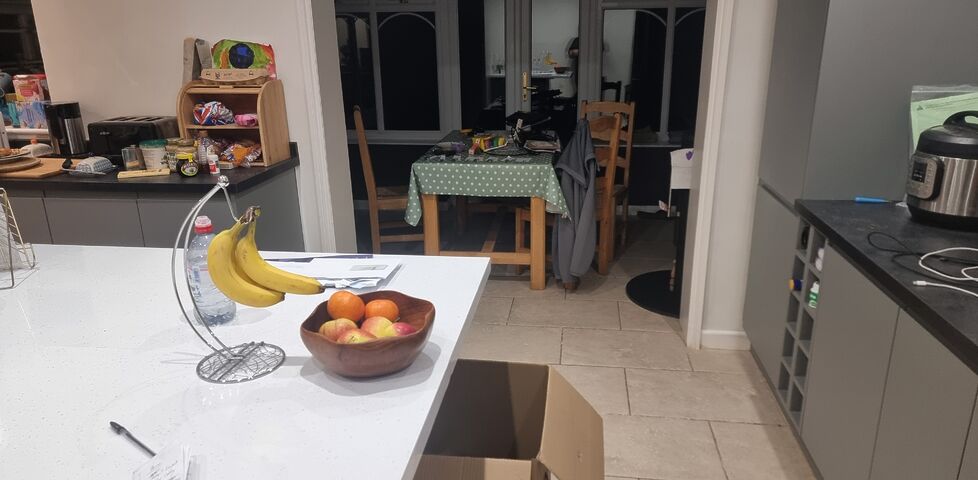
Today’s mission in what we’re calling the Chicory House – our home while our actual house gets repaired – was to unpack the kitchen. I think it’s looking pretty good!
Next weekend’s mission will be to set myself up a workspace that isn’t the conservatory dining table. 😬
Woof! Burglars!
F-Day plus 55
It’s fifty-five days since my house flooded. Since then, I’ve lived in hotels, with friends, on volunteering retreats and – mostly – in a series of one- or two-week AirBnB-style short-term lets. It’s been wild. It’s also been wildly disruptive. To our work. To our kids. To our general stability.
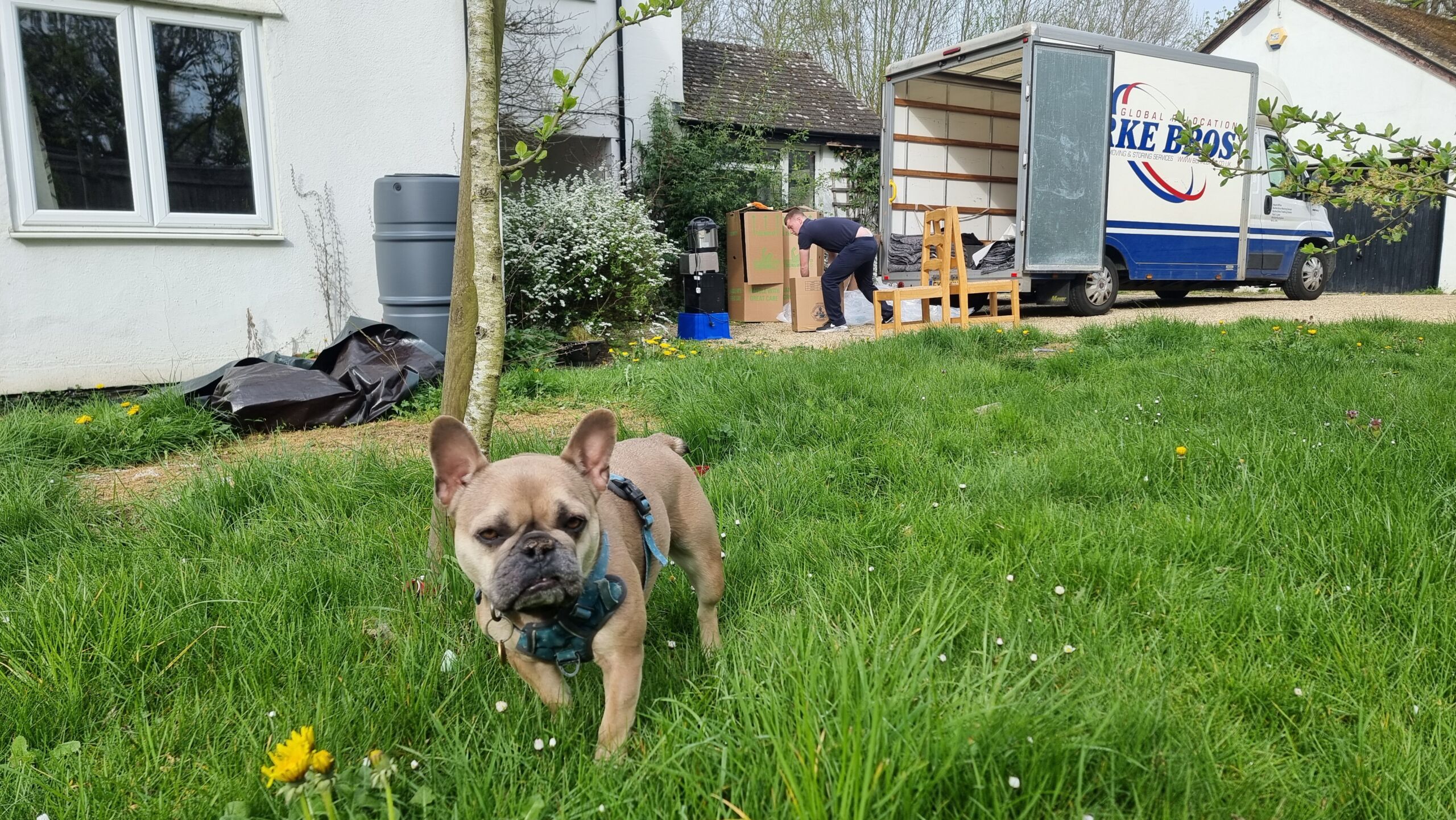
Today, we make a change. Today we’re moving into a medium-term let: sonewhere we can stay for the… say… six months or so it’ll take to actually repair our house so we can move back in. We’ll have our own space again in a way we haven’t in a couple of months.
I know the hard work isn’t done. Our house is still a wreck! But it feels like, perhaps, we’re beginning the second act of the three-act play “The Year Of The Flood”. And that feels like progress.
Right, I’d better go move house! (for like the seventh time this year…)
F-Day plus 38
It’s 38 days since our house was damaged in a flash flood, and today’s the first of our ‘BER’ assessment. BER stands for Beyond Economical Repair. It basically means that anything on the list is something that the insurance company intend to ‘write off’: to declare irreparable or not-worth repairing and scrap, replacing it with an equivalent new one.
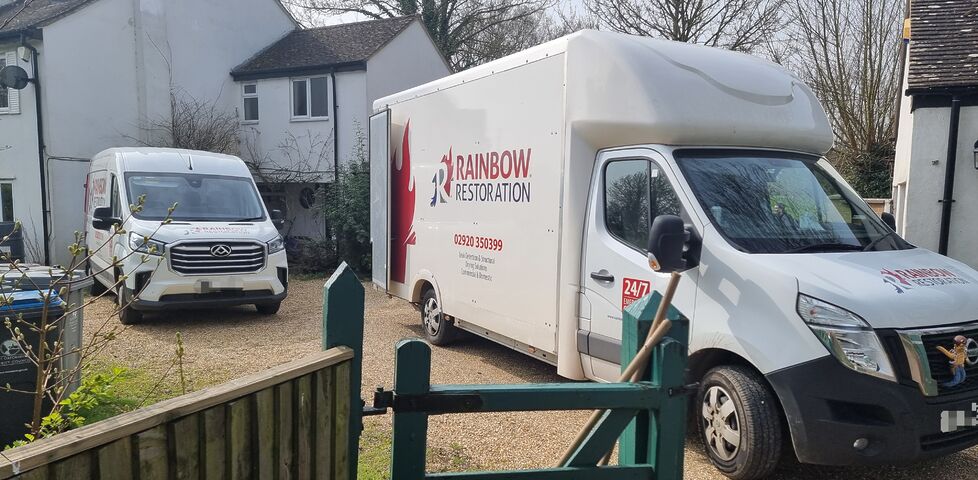
So today, while I work, I’m watching a trio of men carry all of the soft furnishings, white goods, and rugs, plus any plywood/MDF-based furniture that got soaked into a pair of vans on the driveway, making notes where possible of the makes and models of things as they go.
My home is rapidly becoming more cavernous and echoey.
F-Day plus 35
It’s F-Day plus 35, and I’m spending a few hours working in the habitable part of our flood-damaged house while I’m “between” two AirBnBs.
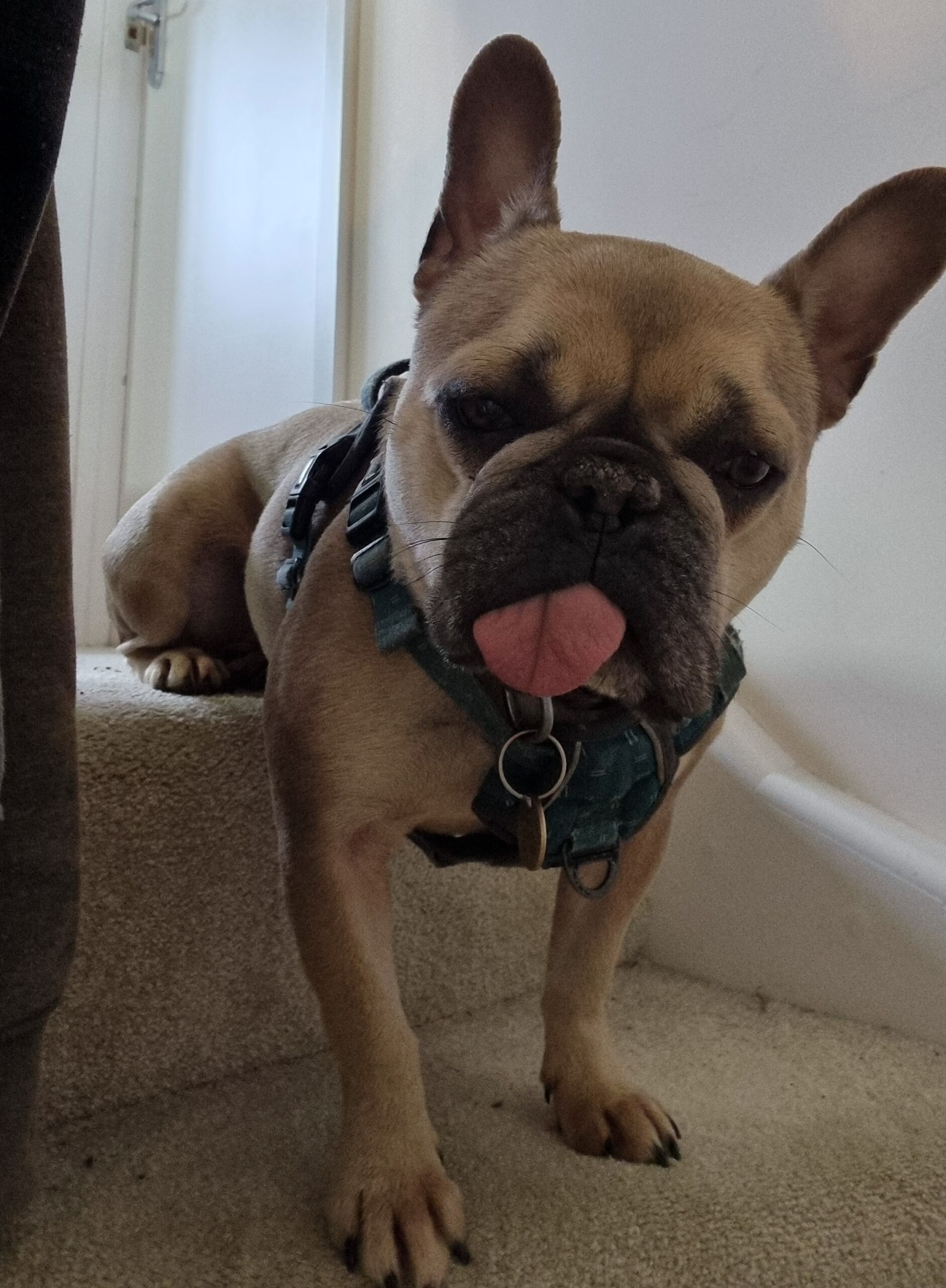
The dog, who doesn’t normally get to come upstairs, is sitting with me on the landing. Except she also wants to keep an eye on what’s happening downstairs.
The result? Her back legs are sitting and her front legs are standing as she peers blepfully down the stairs.
A Hundred Inconveniences
It’s F-Day plus 31 – a whole month (and a bit; thanks February) since our house filled with water and rendered us kinda-homeless.
We continue to live out of a series of AirBnB-like accommodations, flitting from place to place after a week or fortnight. I can’t overstate how much this feels like a hundred tiny inconveniences, piling up in front of me all at once and making it hard to see “past” them.
They’re all small potatoes compared to the bigger issue of, y’know… our house being uninhabitable. But they’re still frustrating.
I’m talking about things like discovering your spare toothbrush heads are at the “wrong” house. Or having to take extra care to plan who’s going to use which car to go to the office because the kids and the dog need dropping off (because our lives were all optimised for our local walking and bus routes). It’s a level of cognitive load that, frankly, I could do without.
Meanwhile, any relief is slow to come. We’re still without a medium-term plan for somewhere to live, because even though the insurance company has pulled their finger out and agreed to pay for say six months of rental of a place, we’re struggling to find a suitable property whose landlord is open to such a short-term let.
When the house first flooded and friends told me that I’d be faced with many months of headaches, I figured this was hyperbole. Or that, somehow, with the epic wrangling and project management skills of Ruth, JTA and I combined, that we’d be able to accelerate the process somewhat. Little did I know that so many of the problems wouldn’t be issues of scale or complexity but of bureaucracy and other people’s timescales. Clearly, we’re in it for the long haul.
It feels silly that we’re still in the first quarter of this 2026 and already I’m looking forward to next year and the point where we can look back and laugh, saying “ah, remember 2026: the year of the flood?” Sigh.
F-Day plus 19
Nineteen days after my house flooded, causing extensive damage on the ground floor, the insurance company has finally accepted the claim and is willing to pay for our temporary accommodation in the meantime (a few days in a hotel, a few days with friends although that’s not paid-for, four weeks in two different holiday lets), although we’re still waiting for their thumbs-up on a proposal for a ~6-month let of a house to live in while our floors are replaced and our kitchen rebuilt and whatnot.
Meanwhile, yesterday a surveyor came around and looked at all of our walls. Everything still feels like it’s taking a very long time. I appreciate that insurance companies are a maze of bureaucracy and procedure, but from “this side” of the table – living and working out of strange places, never really feeling “unpacked” but without it being a holiday – it’s all a bit of a drag!
Dog tired
6-12 Months
The insurance loss adjusters came around this morning, accompanied by damage assessors and electricians and whatnot.
The process continues to feel painfully slow. We’re still one to two weeks from confirmation that the insurance company will accept liability and be ready to start paying for, y’know, the immediate concerns like where we’re going to live.
“How long should we plan on renting another house to live in?” I asked, warily.
“Six to twelve months?” guessed the loss adjusters.
Erk! 😭
The calm after the storm
This morning, from my Premier Inn window, the skies are clear. I could almost forget that, just 4 miles away, my house is full of water.
Today may well be a day of waders and damage assessment, conversations with insurance companies and of working out where we’ll be living for the near future.
But strangely, what’s thrown me first this morning was that I couldn’t make this post submit.
Turns out my crosspost-to-mastodon checkbox was checked. Because my Mastodon server… runs on my homelab. Which is currently unplugged and in one of the highest rooms of a house with no electricity or Internet access. (Or, probably, running water… although that matters less to a homelab.)
I think I moved it before it got wet, but yesterday is such a blur that I just don’t know. I remember we spent some time fighting back the water with sandbags and barricades. I remember the moments each room began to fail, one by one, and we started moving whatever we could carry to higher floors (max props to folks from Eynsham Fire Bridade for helping with the heavy stuff). But if you ask me what order we rescued things in, I just don’t know.
I guess we’ll find out when the waters recede, and it’s safe to go check.
Fucking hell.
Note #27464
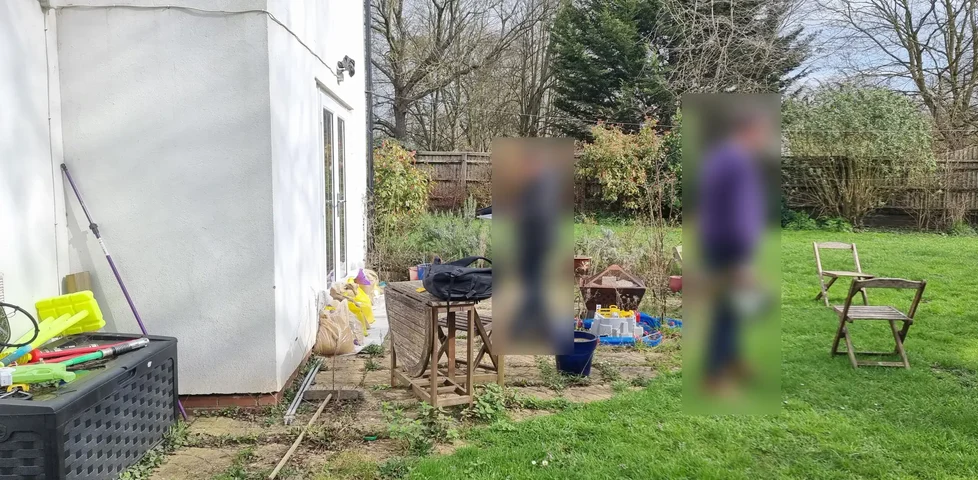
Today, I can overhear the two guys who are digging a trench through my garden.
Guy 1: Does this look like a gas pipe to you?
Guy 2: Dunno. But we can’t dig round it soo…
😬
Coaching in the Library
I decided to take my meeting with my coach today in our house’s new library, which my metamour JTA has recently been working hard on decorating, constructing, and filling with books. The room’s not quite finished, but it made for a brilliant space for a bit of quiet reflection and self-growth work.
(Incidentally: I might be treating “lives in a house with a library” as a measure of personal success. Like: this is what winning at life looks like, right? Because whatever else goes wrong, at least you can go hide in the library!)
Shared Email Addresses
Email Antipatterns
There are two particular varieties of email address that I don’t often see, but I’ve been known to ridicule when I have:
-
Geographically-based personal email addresses, e.g.
OurHouseName@example.com. These always seemed to me to undermine one of the single-best things about an email address compared to postal mail – that they don’t change when you move house!1 -
Shared/couple email addresses, e.g.
MrAndMrsSmith@example.net. These make me want to scream “You know email addresses are basically free, right? You don’t have to share one!” Even back when most people got their email address directly from their dial-up provider, most ISPs offered some number of addresses (e.g. five).
If you’ve come across either of the above before, there’s… perhaps a reasonable chance that it was in the possession of somebody born before 1960 (and the older, the more-likely)2.
You’ll never catch me doing that!
I found myself thinking about this as I clicked the “No” button on a poll by Terence Eden that asked whether I used a “shared” email address when in a stable long-term relationship.
It wasn’t until after I clicked “No” that I realised that, in actual fact, I have had multiple email addresses that I’ve share with significant other(s). And more than that, sometimes they’ve been geographically-based! What’s going on?
I’ve routinely had domains or subdomains that I’ve used to represent a place that I live. They’re convenient for when you want to give somebody a short web address which’ll take them to a page with directions to you and links to your location in a variety of different services and formats.
And by that point, you might as well have an email alias, e.g. all@myhouse.example.org, that forwards on email to, well, all the adults at the house. What I’ve
described there is, after a fashion, a shared email address tied to a geographical location. But we don’t ever send anything from it. Nor do we use it for any kind of
personal communication with anybody outside the house.
We don’t give out these all@ addresses (or their aliases: every company gets their own) to people willy-nilly. But they’re useful for shared services that send
automated emails to us all. For example:
- Giving a forwarding alias to the supermarket means that receipts (listing any unavailable products) g0 to all of us, and whoever’s meal plan’s been scuppered by an awkward substitution will know what’s up.
- Using a forwarding alias with the household Netflix account means anybody can use the “send me a sign-in link” feature to connect a new device.
- When confirming that you’ve sent money to a service provider, CC’ing one of these nice, short aliases provides a quick way to let the others know that a bill’s been paid (this one’s especially useful where, like me, you live in a 3+ adult household and otherwise you’d be having to add multiple people to the CC field).
Sure, the need for most of these solutions would evaporate instantly if more services supported multi-user or delegated access3. But outside of that fantasy world, shared aliases seem to be pretty useful!
Footnotes
1 The most ill-conceived example of geographically-based email addresses I’ve ever seen
came from a a 2003 proposal by then-MP Derek Wyatt, who proposed that the domain name part of every single email address should contain not
only the country of the owner (e.g. .uk) but also their complete postcode. He was under the delusion that this would somehow prevent spam. Even ignoring the
immense technical challenges of his proposal and the impossibility of policing it across the borders of every country that uses email… it probably wouldn’t even be
effective at his stated goal. I’ll let The Register take it from here.
2 No ageism intended: I suspect that the phenomenon actually stems from the fact that as email took off in the noughties this demographic who were significantly more-likely than younger folks to have (a) a very long-term home that they didn’t anticipate moving out of any time soon, and (b) an existing anticipation that people and companies wrote to them as a couple, not individually.
3 I’d love it if the grocery delivery sites would let multiple “accounts”, by mutual consent, share a delivery slot, destination, and payment method. It’d be cool to know that we could e.g. have a houseguest and give them temporary access to a specific order that was scheduled for during their stay. But that’s probably a lot of work for very little payoff if you’re busy running a supermarket.