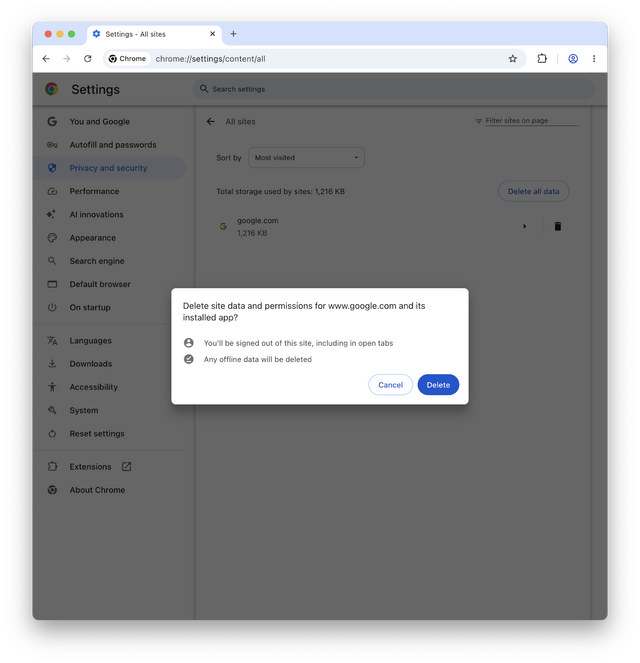
As far as I can tell, www.google.com is the only site exempted by Chrome. Looking inside the ~/Library/Application
Support/Google/Chrome/Default folder, it appears that the saved site data consists of Cookies, Local Storage, and Session Storage.
..
I wish the government would move fast and break up the Google Search monopoly. Don’t even get me started about how when you’re not signed in to Google, all Google Search results are
now opaque https://www.google.com/goto?url= garbage rather than the site URLs!
So yeah: Google have (not for the first time, and perhaps to nobody’s surprise) nerfed the privacy features of their own browser. Now it only fully respects the user’s privacy wishes
when the user isn’t accessing a Google product. So when they use Google Search, GMail, Google Maps, YouTube, or – I suppose – any website with Google Analytics installed…
the user’s privacy settings might not be respected.
I increasingly struggle to understand why so many folks use Chrome as their daily driver: it feeds the monopoly of Google, who time and time again show that they’re not trustworthy with
that power. Meanwhile, if you really need Chrome-compatibility, there are no shortage
of Chromium-powered browsers to meet every need. There is no need to specifically use Chrome, and doing so supports unethical digital surveillance by the world’s
eighth-largest company.
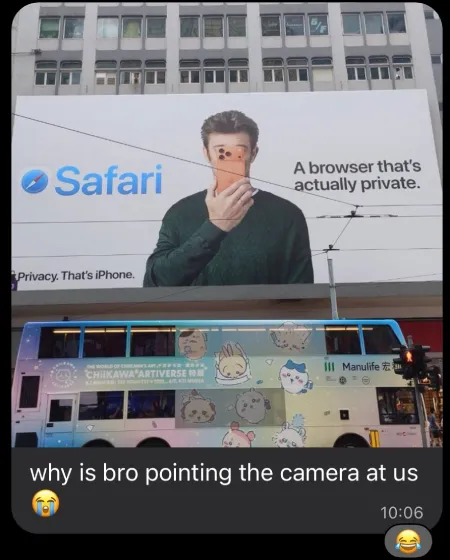
Wombat sent me the above picture: A physical ad by Apple on a big canvas. Pictured is a person hiding their face with their iPhone, but
therefore actually pointing the camera at the people seeing the ad. It says: “Safari. A browser that’s actually private.” and “Privacy. That’s iPhone.“
It’s accidentally perfectly demonstrating the limitations in current popular privacy discourse and movement: The fact that devices or software may claim to keep the users private,
but not people in general, especially not the people the users point these devices at.
Privacy, as it is commonly practiced and advertised, is for the person inflicting the damage onto their surroundings, not their surroundings.
…
A wonderful take on big tech privacy culture that’s better-expressed than I could have ever put it. That Apple poster shows a particularly ironic lack of self-awareness!
Techbros seem to want to sell individual privacy while simultaneously undermining society‘s privacy: you get “privacy settings”, but we’re still
tracking-by-default everybody else. They deliberately turn a blind eye to the fact that the latter – in our age of big data processing – undermines the former: there are countless
examples now of people finding new ways to interpret leaked corporate datasets in order to extract personally-identifiable information, and it’s a problem that only seems to get worse.
“Privacy settings” are important, but wouldn’t it be nicer if privacy was the default?
And yeah: smart glasses can get fucked. I don’t want a world in which having a conversation with somebody in specs requires that I allow Facebook to watch and listen-in as well.
Just wear some Normal Fucking Sunglasses, ‘k?
I made the flaming digits using a stock effect in Corel Photo-Paint; this is an attempt to replicate the “feel” of them.
Hit counters are pretty dumb for a variety of reasons. Counting “hits” was never a terribly-representative reflection of the popularity of your pages. But also: because they’re
a public representation of your popularity, there was every incentive to “game” them… even just by hitting refresh a couple of times. Making them untrustworthy and pointless.
1998 —
2006: Webalizer
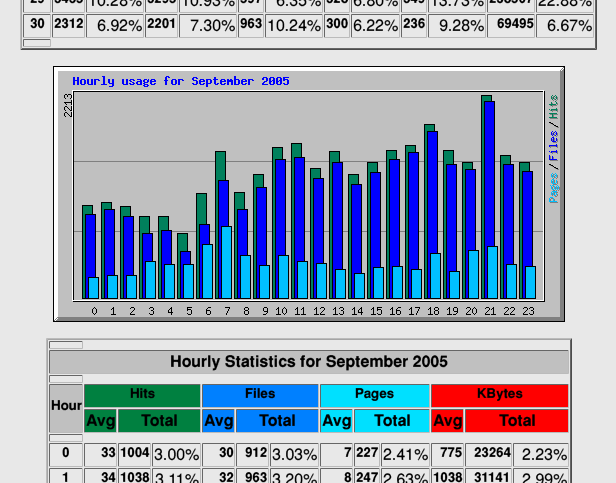
Who can forget The Webalizer? Those Microsoft Excel ’97-grade barcharts!
Back in the day, “proper” web stats was something you did on your log files. Take log files, pump them through a program, get amalgamated output. And the king of these tools was
The Webalizer.3
On a few of my websites – and some that I helped host for my friends – I’d have The Webalizer run daily, collating an archive of monthly stats plus “month-so-far” for the
current month.
The Webalizer attempted to differentiate “hits” from “visitors”. And it tried to distinguish between browsers, and isolated bots, and tracked pulled referrer-data, and could
even try to geolocate IP addresses. It was pretty magical for its time.
2006 —
2016 Google Analytics
I was an early adopter of Google Analytics: my site ID (“UA code”) was only five digits long!
Those graphs were slick for the Web technology of the day. A product of that period in the mid-naughties when Google made products that actually impressed users
and didn’t just make them roll their eyes?
Google Analytics works via a JavaScript snippet which collects a variety of information about the visitor and sends it to Google’s mothership.
A third-party cookie that connected all Google Analytics-powered sites, plus everybody’s activity on other Google products, provided a wealth of data that you
couldn’t get any other way. Want a gender breakdown of your visitors or their interests? Google can “help” you with that… and all the while, “helping” themselves to copies of all the
data too.
If your website runs Google Analytics, it’s part of Google’s massive data-harvesting machine, monitoring people as they move around the Web. Webmasters trading away their visitors’
identities for some pretty charts seems pretty disgusting to me; it saddens me that I was ever “part of the problem”.
2015 —
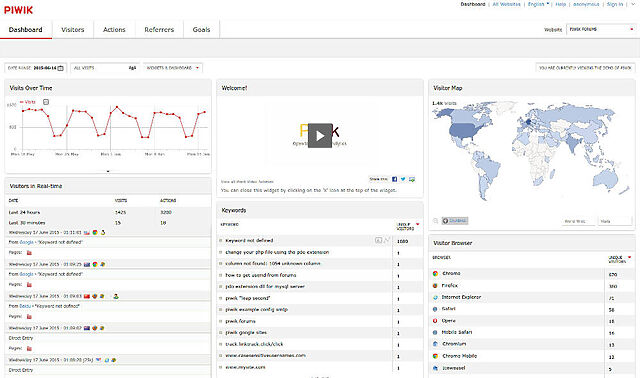
2023 Piwik
Since around 2010, I’d been actively blocking Google Analytics, which made me feel a bit like a hypocrite to be inflicting it upon others. I looked for an alternative and found it in
Piwik (now Matomo), an open-source and self-hosted analytics tool.
A self-hosted Piwik/Matomo installation provides almost the same level of useful depth as Google Analytics, but you get to keep your soul.
I ran Google Analytics and Piwik side-by-side to validate the latter, and found it to be excellent. Not only was it collecting data
in a much more-ethical and respectful way, but it was also producing more-accurate results for my readership who, leaning somewhat “techie”, would sometimes block Google
Analytics outright for all of the same reasons I did.
It was pretty good, but…
2023 — …
(Almost) nothing?
…I don’t like the kind of blogger I am when I’m collecting stats!
It’s like… being a teenager again and having that hit counter, and getting excited when it goes up. So what if a number went up? What does
“popularity” mean? Isn’t the impact more important than the number of eyeballs?4
So in 2023, after winding my analytics down by instalments for many years, I just… stopped.5
I realised that so long as I was able to easily “watch the stats”, I’d be temped to write for the stats. To treat it as a score. To make the hit counter go up.6
That, in essence, is why I don’t really “do” any webstats any more. Analytics don’t serve me and the blogger I want to be, and they didn’t represent anything that I would
consider a useful metric of success.
If somebody’s moved by what I do, that’s great: but a hit counter going up by one doesn’t tell me that; and it never did. Now if they leave a comment or drop me an email or even
send me a postcard, that’s how I know that I made a difference!
Exception to the rule: GoAccess!
While I don’t actively watch the stats any more, I suppose I can still generate them, from my webserver logs, Webalizer-style. Except nowadays I’d probably
use GoAccess:
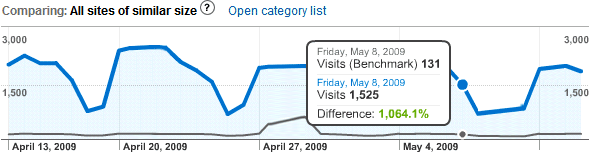
There’s a bit of a “hump” where last week’s blog post about apps started trending on Bubbles, HackerNews, Lobste.rs and the like. But I knew that already because people sent
me lots of comments!
There’s a script that I’m able to run, if I feel like it, to parse the most-recent of my Caddy logfiles. It takes about one minute to run per day
of logs to process, and outputs a perfectly attractive self-contained HTML file.
It’s not clever. It’s not sophisticated. It doesn’t use cookies or JavaScript or, indeed, anything other than what my webserver gives me for free.
I barely use it: maybe once every 18 months or so (today was the first time in well over a year). It’s there if I need it. And it’s inconvenient-enough to use that I’m not tempted to.
2 By “blog stats”, here, I mean statistics about visitors to my blog, not
stats about my blogging (which I track and share in excruciating detail).
3 Did you know that the last point release of The Webalizer was in 2013 and
the last feature release was in 2010: much later than I thought was the case!
4 Also, how do we even count “eyeballs”. Right now, about a fifth to a quarter of my
visitors are bots. Amazonbotalone accounts for over 2% of my traffic. (I should probably tighten my
robots.txt.)
5 Nowadays, there’s no tracking scripts whatsoever on my site. I
don’t set a cookie unless you ask me to (and then it’s “transparent”: you can see exactly what it contains and what it’s for), I don’t try to fingerprint you in any way, I don’t even
keep server logs longer than 60 days! Back when I used Jetpack I actively nerfed its stats-collection “features”. I don’t want your personal data!
For 25 years, Google Search was built on a contract. The web provided the content – billions of pages, freely linked, freely crawled. In return, Google sent people back. The link
was the unit of exchange. It’s what made the Web thrive as an information system: you publish, Google indexes, users click through, and value flows back to the source. Win-win.
That contract is now broken. Generative UI doesn’t link to your article, necessarily. It absorbs your article, synthesizes it into a
widget, and presents it as Google’s own answer. Information agents don’t send users to websites. They deliver “synthesized updates” with maybe a link or two buried at the bottom.
The web was the scaffolding Google needed to build its index, to train its models, to accumulate the world’s information, and put ads next to it to get filthy rich. Now that the
content is inside the system, the scaffolding is no longer needed. Google is creating its own context.
Google thinks it no longer needs the Web to deliver answers. And it no longer needs ad slots to deliver ads. What it needs is you. Your emails, your files, your calendar,
your purchase history, your travel plans – all flowing into Spark, all building the richest possible picture of who you are and what you’re likely to click on. That’s exactly the
kind of personal context those auction models need to work. The prediction module in the prominence allocation framework doesn’t run on keywords. It runs on knowing you.
…
An excellent piece by Matthias Ott, discussing revelations from this year’s Google I/O. In particular, the imminent pivot of Google Search from its lifelong “query in, list of links
out” model to a wholesale “query in, LLM output out” one.
This isn’t just about putting AI output at the top of the search results, as I gather they do today, but about getting rid of search “results” entirely, and
running everything through the model.
To which Matthias wisely asks: well, how will ads work then? Google’s business model is based on mining your personal data and shoving ads in your face. Where do they go in a search
interface that it’s really a search but a “helpful” AI.
It turns out there’s a few approaches that Google seem to be considering, but what they’ve all got in common is the idea that marketers will be able to “influence” the LLM’s token
generation, perhaps by using an LLM of their own to decide whether you (based on everything Google knows about you) are worth marketing to, and how much they’ll pay to do so, and then
this input being “weighted” against competing advertisers and actual ingested data in order to feature advertiser-influenced content woven directly into the output of the LLM.
Superficially, this sounds a little like product placement, like you sometimes see in American-made TV shows and movies. You know, where one character says, of “I’m going to go get a
drink refill. You know you can get unlimited refills on any drink you want… and it’s free?”, and the next says “It’s a wonderful restaurant.”, while they’re sitting in Burger King.
Except this isn’t about saying “hey, people who watch this show are probably high and want a snack, let’s push our fast food their way”. It’s individualised.
It’s more like if the characters, knowing that your GMail account had a recent email about some test results, and your Google Calendar had an appointment tomorrow at the doctor, started
talking about a particular brand of medication to, y’know, put the idea into your head.
The future presented in Futurama was supposed to be a joke, right?
We’re not at the point of completely-customised TV shows – nor the injection of commercials into dreams – yet. But Google’s plans, which blur the already-grey boundaries between organic
and advertising content, are pretty insidious.
Assuming you’re in their ecosystem already, and possibly even if you’re not… Google may already be looking at your search terms, your calendar, your emails, your location and schedule,
who you communicate with and how often, which web pages you visit, which apps you use, where you spend money, etc. (Seriously: if you somehow haven’t begun de-googling already, what are
you waiting for?)… there’s a huge potential for misuse there.
But the arms race between people blocking or learning-to-ignore ads and advertisers trying to foist them upon us continues, and Google thinks this is an acceptable next step in
escalating that. Using an insane amount of energy to recycle other people’s work without crediting them, in order to mash up the result with information they know about you in order to
deliver you an unverifiable soup of words which might answer your question but with no clue how much or little commercial interest went into producing it, or by whom.
That’s some proper Darkest Timeline shit, right there.
You don’t need to take my nor Matthias’s word on it (although you should read his full post because it’s excellent): just look at the concept videos in Google’s blog post on the subject. You’ll also notice that almost-nowhere
in their demos do Google even hint at the possibility of linking-out to anybody else’s website: there’s like one “visit site” button that appears at the very end of
one of the flows, after the agent has done its things. Google is building a walled garden where they hope you’ll live, served by their AI butler on behalf of the companies
who pay Google to tell you about their products.
why bother going to the brick-and-mortar store? amazon is more “convenient”. why bother cooking a nice meal for yourself? doordash and uber eats are more
“convenient”. why go out and socialize with people? facebook is more “convenient”. why use a digital camera, camcorder, or polaroid? your
smartphone is more “convenient”. why bother going to the theater or concerts? netflix and spotify are more “convenient”. why bother making art?
asking an AI to generate it for you is more “convenient”.
well, i say nuts to that. from now on, i’m going to make my life as inconvenient as possible. i’m going to go to the store and buy stuff in person. i’m going to make my own
food with my own hands. i’m going to socialize with people face-to-face. i’m going to use a true camera instead of my phone’s camera. i’m going to buy blu-rays, DVDs, and CDs
instead of streaming. i’m going to take my time when creating, watching, playing, and reading a work of art.
…
I’m seeing an growing movement in indieweb, revivalist, and adjacent circles that express RNotté’s sentiment: that the endless (and highly-marketable) quest for increased convenience in
our lives has gained us free time, but we’ve lost something along the way.
What we’ve lost varies from case to case, but includes freedom (from lock-in to subscription services), creative satisfaction (from convenient “artistic” expression), privacy (from
becoming the product, packaged-up by big-data advertising-funded tools), and social interactions (from so much of “social” media).
But reading RNotté share their thoughts on the matter today was the first time that it’s reminded me of The Matrix.
The connection was probably helped by the fact that I rewatched the film pretty recently.
There’s a bit where Agent Smith says, to his captive the rebel captain Morpheus:
Did you know that the first Matrix was designed to be a perfect human world? Where none suffered, where everyone would be happy. It was a disaster. No one would accept the program.
Entire crops were lost. Some believed we lacked the programming language to describe your perfect world.
Smith goes on to elucidate that his personal explanation for this fault was that humans depend upon suffering and misery, while acknowledging that there are other explanations. And
perhaps we’ve touched upon one.
Perhaps humans – all humans – have a limit for how much they’re willing to accept convenience as compensation. Connected humans in The Matrix grain a convenient life,
superficially superior to the struggle for survival experienced by humans living in the real world, short on food and hunted by machines. But to get that, they trade away their
individual ability to become aware of the truth and, collectively, the ability for humanity for shape its own destiny. But there’s something about the imbalance of power in the
arrangement niggles in human minds, and some rebel against the established order… and are joined by others who are shown that an alternative is available.
Clearly – as RNotté and others show – faceless technological forces need not go quite so far as enslaving an entire species before “convenience” no longer becomes a tolerable
mitigation!
I’m not convinced that seeking out inconvenience is in itself a good. But questioning what your conveniences are worth and what you’re paying for them… that’s definitely
worthwhile.
As I’ll demonstrate, it’s surprisingly easy to spin up your own VPN provider on a virtual machine hosted by your choice of the cloud providers. You pay for the hours you need
it2,
and then throw it away afterwards.
If you’d prefer to use GCP, AWS Azure, or whomever else you like: all you need is a Debian 13 VM with a public IP address (the cheapest one available is usually plenty!)
and this bash script.
If you prefer the command-line, Linode’s got an API. But we’re going for ‘easy’ today, so it’ll all be clicking buttons and things.
First, spin up a VM and run my script3.
If you’re using Linode, you can do this by going to my StackScript and clicking ‘Deploy New Linode’.
You might see more configuration options than this, but you can ignore them.
Choose any region you like (I’m putting this one in Paris!), select the cheapest “Shared CPU” option – Nanode 1GB – and enter a (strong!) root password, then click Create Linode.
It’ll take a few seconds to come up. Watch until it’s running.
Don’t like SCP? You can SSH in and ‘cat’ the configuration or whatever else you like.
My script automatically generates configuration for your local system. Once it’s up and running you can use the machine’s IP address to download wireguard.conf locally. For
example, if your machine has the IP address 172.239.9.151, you might type scp -o StrictHostKeyChecking=no root@172.239.9.151:wireguard.conf ./ – note that I
disable StrictHostKeyChecking so that my computer doesn’t cache the server’s SSH key (which feels a bit pointless for a “throwaway” VM that I’ll never connect to a second time!).
If you’re on Windows and don’t have SSH/SCP, install one. PuTTY remains a solid choice.
File doesn’t exist? Give it a minute and try again; maybe my script didn’t finish running yet! Still nothing? SSH into your new VM and inspect
stackscript.log for a complete log of all the output from my script to see what went wrong.
Not got WireGuard installed on your computer yet? Better fix that.
Open up WireGuard on your computer, click the “Import tunnel(s) from file” button, and give it the file you just downloaded.
You can optionally rename the new connection. Or just click “Activate” to connect to your VPN!
If you see the ‘data received’ and ‘data sent’ values changing, everything’s probably working properly!
You can test your Internet connection is being correctly routed by your VPN by going to e.g. icanhazip.com or ipleak.net: you should see the IP address of your new virtual machine and/or geolocation data that indicates that you’re in your selected region.
When you’re done with your VPN, just delete the virtual machine. Many providers use per-minute or even per-second fractional billing, so you can easily end up spending only a handful of
cents in order to use a VPN for a reasonable browsing session.
Again, you can script this from your command-line if you’re the kind of person who wants a dozen different locations/IPs in a single day. (I’m not going to ask why.)
When you’re done, just disconnect and – if you’re not going to use it again immediately – delete the virtual machine so you don’t have to pay for it for a minute longer than you
intend4.
I stopped actively paying for VPN subscriptions about a decade ago and, when I “need” the benefits of a VPN, I’ve just done things like what I’ve described above. Compared to a
commercial VPN subscription it’s cheap, (potentially even-more) private, doesn’t readily get “detected” as a VPN by the rare folks who try to detect such things, and I can enjoy my
choice of either reusable or throwaway IP addresses from wherever I like around the globe.
And if the government starts to try to age-gate commercial VPNs… well then that’s just one more thing going for my approach, isn’t it?
Footnotes
1 If you’re a heavy, “always-on” VPN user, you might still be best-served by one of the
big commercial providers, but if you’re “only” using a VPN for 18 hours a day or less then running your own on-demand is probably cheaper, and gives you some fascinating
benefits.
2 Many providers have coupons equivalent to hundreds of hours of free provision, so as
long as you’re willing to shuffle between cloud providers you can probably have a great and safe VPN completely for free; just sayin’.
3 Obviously, you shouldn’t just run code that strangers give you on the Internet unless
you understand it. I’ve tried to make my code self-explanatory and full of comments so you can understand what it does – or at least understand that it’s harmless! – but if you don’t
know and trust me personally, you should probably use this as an excuse to learn what you’re doing. In fact, you should do that anyway. Learning is fun.
4 Although even if you forget and it runs for an entire month before your billing cycle
comes up, you’re out, what… $5 USD? Plenty of commercial VPN providers would have charged you more than that!
I have a credit card with HSBC1. It doesn’t see much use2,
but I still get a monthly statement from them, and an email to say it’s available.
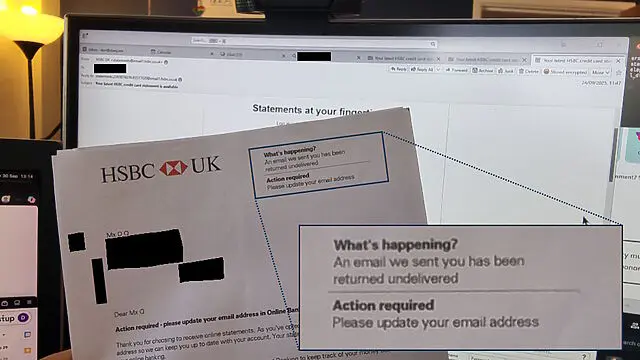
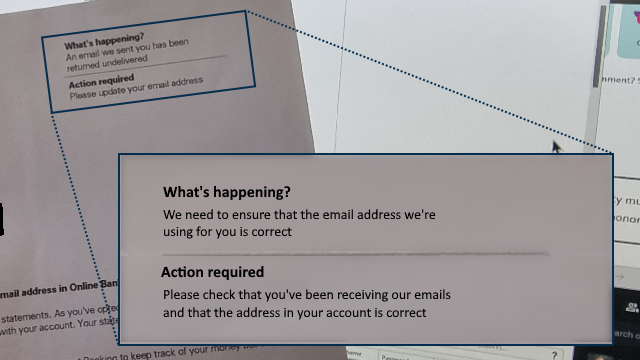
Not long ago I received a letter from them telling me that emails to me were being “returned undelivered” and they needed me to update the email address on my account.
“What’s happening?”
I don’t know what emails are being “returned undelivered” to HSBC, but it isn’t any of the ones sitting, read, in my email client.
I logged into my account, per the instructions in the letter, and discovered my correct email address already right there, much to my… lack of surprise3.
So I kicked off a live chat via their app, with an agent called Ankitha. Over the course of a drawn-out hour-long conversation, they repeatedly told to tell me how to update my
email address (which was never my question). Eventually, when they understood that my email address was already correct, then they concluded the call, saying (emphasis mine):
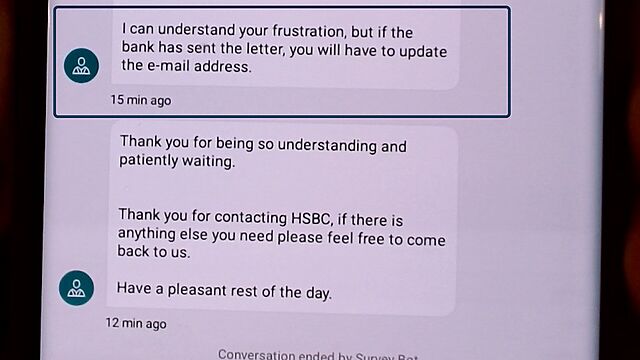
I can understand your frustration, but if the bank has sent the letter, you will have to update the e-mail address.
This is the point at which a normal person would probably just change the email address in their online banking to a “spare” email address.
Perhaps I should be grateful that they didn’t say that I have to change my name, which can sometimes be significantly more awkward than my email
address…
So I called Customer Services directly5,
who told me that if my email address is already correct then I can ignore their letter.
I suggested that perhaps their letter template might need updating so it doesn’t say “action required” if action is not required. Or that perhaps what they mean to say is
“action required: check your email address is correct”.
Say what you mean, HSBC! I’ve suggested an improvement to your letter template.
So anyway, apparently everything’s fine… although I reserved final judgement until I’d seen that they were still sending me emails!
“Action required”
I think I can place a solid guess about what went wrong here. But it makes me feel like we’re living in the Darkest Timeline.
You know the one I mean. Somebody rolled a ‘1’, didn’t they…
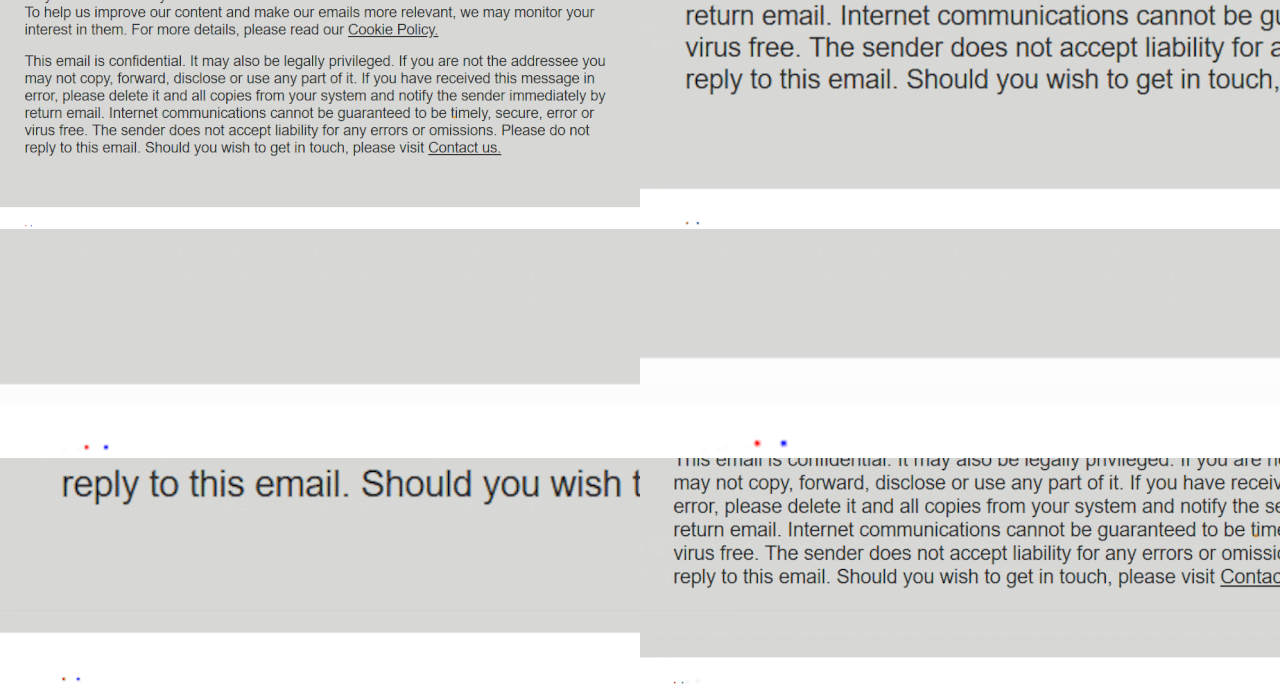
I dissected HSBC’s latest email to me: it was of the “your latest statement is available” variety. Deep within the email, down at the bottom, is this code:
What you’re seeing are two tracking pixels: tiny 1×1 pixel images, usually transparent or white-on-white to make them even-more invisible, used to surreptitiously track when
somebody reads an email. When you open an email from HSBC – potentially every time you open an email from them – your email client connects to those web addresses to get
the necessary images. The code at the end of each identifies the email they were contained within, which in turn can be linked back to the recipient.
You know how invasive a read-receipt feels? Tracking pixels are like those… but turned up to eleven. While a read-receipt only says “the recipient read this email” (usually only after
the recipient gives consent for it to do so), a tracking pixel can often track when and how often you refer to an email6.
If I re-read a year-old email from HSBC, they’re saying that they want to know about it.
But it gets worse. Because HSBC are using http://, rather than https:// URLs for their tracking pixels, they’re also saying that every time you read an email
from them, they’d like everybody on the same network as you to be able to know that you did so, too. If you’re at my house, on my WiFi, and you open an email from HSBC, not
only might HSBC know about it, but I might know about it too.
An easily-avoidable security failure there, HSBC… which isn’t the kind of thing one hopes to hear about a bank!
Tracking pixels are usually invisible, so I turned these ones visible so you can see where they hide.
But… tracking pixels don’t actually work. At least, they doesn’t work on me. Like many privacy-conscious individuals, my devices are configured to block tracking pixels (and a
variety of other instruments of surveillance capitalism) right out of the gate.
This means that even though I do read most of the non-spam email that lands in my Inbox, the sender doesn’t get to know that I did so unless I choose to tell them.
This is the way that email was designed to work, and is the only way that a sender can be confident that it will work.
But we’re in the Darkest Timeline. Tracking pixels have become so endemic that HSBC have clearly come to the opinion
that if they can’t track when I open their emails, I must not be receiving their emails. So they wrote me a letter to tell me that my emails have been “returned
undelivered” (which seems to be an outright lie).
Surveillance capitalism has become so ubiquitous that it’s become transparent. Transparent like the invisible spies at the bottom of your bank’s emails.
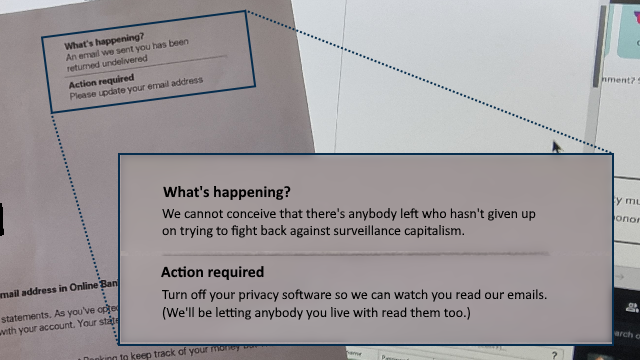
I’ve changed my mind. Maybe this is what HSBC’s letter should have said.
So in summary, with only a little speculation:
Surveillance capitalism became widespread enough that HSBC came to assume that tracking pixels have bulletproof reliability.
HSBC started using tracking pixels them to check whether emails are being received (even though that’s not what they do when they are reliable, which
they’re not).
(Oh, and their tracking pixels are badly-implemented, if they worked they’d “leak” data to other people on my network7.)
Eventually, HSBC assumed their tracking was bulletproof. Because HSBC couldn’t track how often, when, and where I was reading their emails… they posted me a letter to
tell me I needed to change my email address.
What do I think HSBC should do?
Instead of sending me a misleading letter about undelivered emails, perhaps a better approach for HSBC could be:
At an absolute minimum, stop using unencrypted connections for tracking pixels. I do not want to open a bank email on a cafe’s public WiFi and have
everybody in the cafe potentially know who I bank with… and that I just opened an email from them! I certainly don’t want attackers injecting content into the bottom of
legitimate emails.
Stop assuming that if somebody blocks your attempts to spy on them via your emails, it means they’re not getting your emails. It doesn’t mean that. It’s never meant
that. There are all kinds of reasons that your tracking pixels might not work, and they’re not even all privacy-related reasons!
Or, better yet: just stop trying to surveil your customers’ email habits in the first place? You already sit on a wealth of personal and financial information which
you can, and probably do, data-mine for your own benefit. Can you at least try to pay lip service to your own published principles on the
ethical use of data and, if I may quote them, “use only that data which is appropriate for the purpose” and “embed privacy considerations into design and approval processes”.
If you need to check that an email address is valid, do that, not an unreliable proxy for it. Instead of this letter, you could have sent an email that
said “We need to check that you’re receiving our emails. Please click this link to confirm that you are.” This not only achieves informed consent for your tracking, but it can be
more-secure too because you can authenticate the user during the process.
Also, to quote your own principles once more: when you make a mistake like assuming your spying is a flawless way to detect the validity of email addresses, perhaps you should “be
transparent with our customers and other stakeholders about how we use their data”.
Wouldn’t that be better than writing to a customer to say that their emails are being returned undelivered (when they’re not)… and then having your staff tell them that having received
such an email they have no choice but to change the email address they use (which is then disputed by your other staff)?
</rant>
Footnotes
1 You know, the bank with virtue-signalling multiculturalism that we used to joke about.
4 After all, as I’ll stress again: the email address HSBC have for me, and are using,
is already correct.
5 In future, I’ll just do this in the first instance. The benefits of live chat being able
to be done “in the background” while one gets on with some work are totally outweighed when the entire exchange takes an hour only to reach an unsatisfactory conclusion,
whereas a telephone call got things sorted (well hopefully…) within 10 minutes.
6 A tracking pixel can also collect additional personal information about you, such as
your IP address at the time that you opened the email, which might disclose your location.
7 It could be even worse still, actually! A sophisticated attacker could “inject” images
into the bottom of a HSBC email; those images could, for example, be pictures of text saying things like “You need to urgently call HSBC on [attacker’s phone number].” This would
allow a scammer to hijack a legitimate HSBC email by injecting their own content into the bottom of it. Seriously, HSBC, you ought to fix this.
Obviously I wasn’t planning on going to the US anytime soon, but if I did… they might struggle with my visa application when I put every “email address I’ve used for the last 10 years”
on, because I actively use a variety of catch-all domains/subdomains.
I’ve probably missed some addresses (e.g. to which I’ve only ever received spam that’s since been deleted), but a conservative estimate of the number of personal email addresses which
I’ve sent mail from or to would be… 7,669 email addresses. 🤣
I’m writing up this information because Dreamwidth’s legal advocacy work has been largely underrecognized. I have not seen a scrap of mainstream news coverage out there that delves
into the unique role that Dreamwidth has played in the NetChoice lawsuits, and in a tech news landscape that inspires so much resignation and despair, I think people deserve to know
about how Dreamwidth is putting up a fight. Not only does Dreamwidth refuse to engage in intrusive tracking, it’s proactively participating in lawsuits against state governments
that try to force its hand. For all that many lawmakers are trying to make the web worse, Dreamwidth is leveraging itself as proof that a better web is possible.
…
If your mental model of Dreamwidth is “it’s like LiveJournal, but…” then you owe it to yourself to read Coyote’s excellent explanation of how
Dreamwidth is so much more: a beacon of privacy-centric and censorship-resistant blog hosting in a world that increasingly seems at-best uninterested and at-worst actively
hosting to such things.
That it’s not for me personally (I’m more a selfhost type) doesn’t mean it’s not a great choice for you: it’s got solid free and reasonably-priced premium tiers and all the kinds of
features you’d expect from a service live LiveJournal, or Tumblr, or Medium… but without all of the antifeatures that come with each of those.
And yeah, they’re on the side of the good guys:
I think there’s mileage in stealing repurposing this iconic line…
Coyote also wrote the excellent You Can Make A Website, if you’re looking for further reading from
the same author.
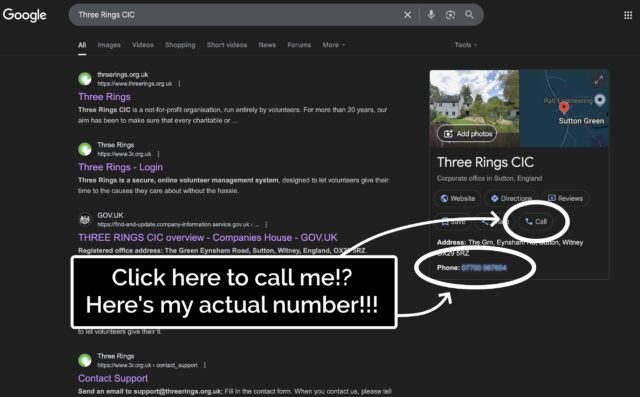
Somebody just called me and quickly decided it was a wrong number. The signal was bad and I wasn’t sure I’d heard them right, so I followed up by replying by text.
It turns out they asked Siri to call Three (the mobile network). Siri then presumably searched online, found Three Rings, managed to connect that to my mobile number, and called me.
I’ve tried to be pragmatic, but there’s something of a dilemma here.
Users should be free to run whatever code they like.
Vulnerable members of society should be protected from scams.
Do we accept that a megacorporation should keep everyone safe at the expense of a few pesky nerds wanting to run some janky code?
Do we say that the right to run free software is more important than granny being protected from scammers?
Do we pour billions into educating users not to click “yes” to every prompt they see?
Do we try and build a super-secure Operating System which, somehow, gives users complete freedom without exposing them to risk?
Do we hope that Google won’t suddenly start extorting developers, users, and society as a whole?
Do we chase down and punish everyone who releases a scam app?
Do we stick an AI on every phone to detect scam apps and refuse to run them if they’re dodgy?
I don’t know the answers to any of these questions and – if I’m honest – I don’t like asking them.
Google’s gradual locking-down of Android bothers me, too. I’ve rooted many of my phones
in order to unlock features that I benefit from (as a developer… and as a nerd!), and it’s bugged me on the occasions where I’ve been unable to run had to use complicated
workarounds to trick e.g. a bank’s app. Having gone to the effort to root a phone – which remains outside of the reach of most regular users – I’d be happy to accept an appropriate
share of the liability if my mistake, y’know, let a scammer steal all of my money.
That’s the risk you take with any device on which you have root, and it’s why we make it hard to the point of being discouraging. Because you can’t just put up a
warning and hope that users will read and understand it, because they won’t. They’ll just click whatever button looks like it’ll get them to the next step without even glancing at the
danger signs1.
I’m glad to have been increasingly decoupling myself from Google’s ecosystem, because I’ve been burned by it too. Like Terence, I’ve been hit by “real name” policies that discriminate against people with unusual names or who might be
at risk of impersonation2.
But I’m not convinced that there’s a good alternative for me to running Android on my mobile devices, at the moment: I really enjoyed Maemo back in the day; what’s the status of
Sailfish nowadays?
I get that we need to protect people from dangerous scammy apps. But I’d like to think there’s a middle-ground somewhere between Doctrowian “it’s your device, you’re responsible for
what runs on it” and the growing Apple/Google thinking of “if we don’t have the targetting coordinates of the developer that wrote the code, our OS won’t let you run it”. I’m ready to
concede that user education alone hasn’t worked, but there’s got to be a better solution than this, Google.
Footnotes
1 Incidentally, I don’t blame users for this behaviour. Users have absolutely
been conditioned, and continue to be conditioned, to click-without-reading. Cookie and privacy banners with dark patterns, EULAs and legal small print are notoriously (and often
unnecessarily) long and convoluted, and companies routinely try to blur the line between “serious thing you should really read but we want you not to” and “trivial thing that you
don’t need to read; it’s just a formality that we have to say it”.
2 Right now, my biggest fight with Google has come from the fact that lately, it seems
like every time I upload a Three Rings demo video to YouTube it gets deleted under their harassment policy for doxxing people…
people like “Alan Fakename” from Somewhereville, “Betty Notaperson” from Otherplace, and their friend “Chris McMadeup” who lives at 123 Imaginary Street. The appeals process turns out
to be that you click a button to appeal, but don’t get to provide any further information (e.g. to explain that these are clearly-fake people who won’t mind being doxxed on account of
the fact that they don’t exist), and then a few hours later you get an email to say “nah, we’re keeping it deleted”. I almost expect the YouTube version of my recent video demonstrating FreeDeedPoll.org.uk will be
next to be targetted by this policy for showing me scribbling the purported signature Sam McRealName, formerly known as Jo Genuine-Person.
Earlier this month, I received a phone call from a user of Three Rings, the volunteer/rota management
software system I founded1.
We don’t strictly offer telephone-based tech support – our distributed team of volunteers doesn’t keep any particular “core hours” so we can’t say who’s available at any given
time – but instead we answer email/Web based queries pretty promptly at any time of the day or week.
But because I’ve called-back enough users over the years, it’s pretty much inevitable that a few probably have my personal mobile number saved. And because I’ve been applying for a couple of
interesting-looking new roles, I’m in the habit of answering my phone even if it’s a number I don’t recognise.
Many of the charities that benefit from Three Rings seem to form the impression that we’re all just sat around in an office, like this. But in fact many of my fellow
volunteers only ever see me once or twice a year!
After the first three such calls this month, I was really starting to wonder what had changed. Had we accidentally published my phone number, somewhere? So when the fourth tech support
call came through, today (which began with a confusing exchange when I didn’t recognise the name of the caller’s charity, and he didn’t get my name right, and I initially figured it
must be a wrong number), I had to ask: where did you find this number?
“When I Google ‘Three Rings login’, it’s right there!” he said.
I almost never use Google Search2,
so there’s no way I’d have noticed this change if I hadn’t been told about it.
He was right. A Google search that surfaced Three Rings CIC’s “Google Business Profile” now featured… my personal mobile number. And a convenient “Call” button that connects you
directly to it.
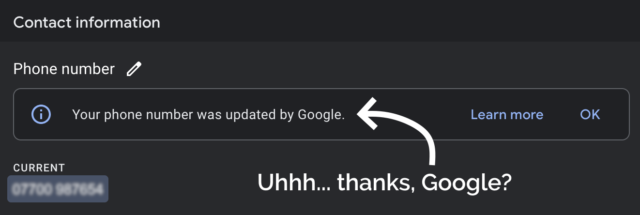
Some years ago, I provided my phone number to Google as part of an identity verification process, but didn’t consent to it being shared publicly. And, indeed, they
didn’t share it publicly, until – seemingly at random – they started doing so, presumably within the last few weeks.
Concerned by this change, I logged into Google Business Profile to see if I could edit it back.
Apparently Google inserted my personal mobile number into search results for me, randomly, without me asking them to. Delightful.
I deleted my phone number from the business listing again, and within a few minutes it seemed to have stopped being served to random strangers on the Internet. Unfortunately deleting
the phone number also made the “Your phone number was updated by Google” message disappear, so I never got to click the “Learn more” link to maybe get a clue as to how and why this
change happened.
Don’t you hate it when you click the wrong button. Who reads these things, anyway, right?
Such feelings of rage.
Footnotes
1 Way back in 2002! We’re very nearly at the point where the Three Rings
system is older than the youngest member of the Three Rings team. Speaking of which, we’re seeking volunteers to help expand our support team: if you’ve got experience of
using Three Rings and an hour or two a week to spare helping to make volunteering easier for hundreds of thousands of people around the world, you should look us up!
2 Seriously: if you’re still using Google Search as your primary search engine, it’s past
time you shopped around. There are great alternatives that do a better job on your choice of one or more of the metrics that might matter to you: better privacy, fewer ads (or
more-relevant ads, if you want), less AI slop, etc.
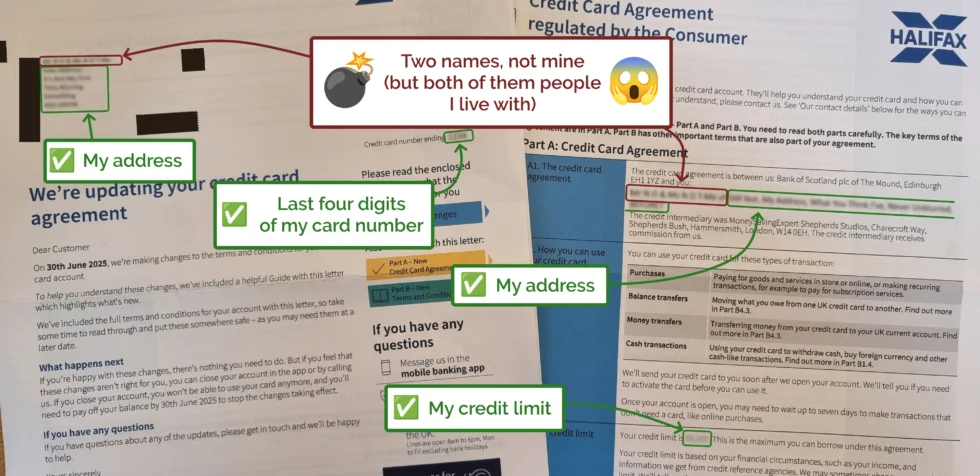
Today, Ruth and JTA received a letter. It told them about an upcoming change to the
agreement of their (shared, presumably) Halifax credit card.
Except… they don’t have a shared Halifax credit card. Could it be a scam? Some sort of phishing attempt, maybe, or perhaps somebody taking out a credit card in their names?
I happened to be in earshot and asked to take a look at the letter, and was surprised to discover that all of the other details – the last four digits of the card, the credit
limit, etc. – all matched my Halifax credit card.
Halifax sent a letter to me, about my credit card… but addressed it to… two other people I live with‽
I spent a little over half an hour on the phone with Halifax, speaking to two different advisors, who couldn’t fathom what had happened or how. My credit card is not (and has never
been) a joint credit card, and the only financial connection I have to Ruth and JTA is that I share a mortgage with them. My guess is that some person or computer at Halifax tried to
join-the-dots from the mortgage outwards and re-assigned my credit card to them, instead?
Eventually I had to leave to run an errand, so I gave up on the phone call and raised a complaint with Halifax in writing. They’ve promised to respond within… eight weeks. Just
brilliant.
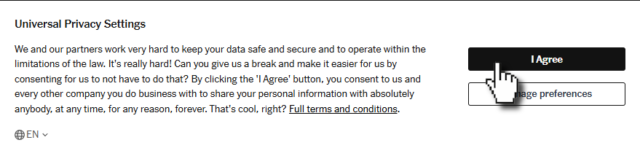
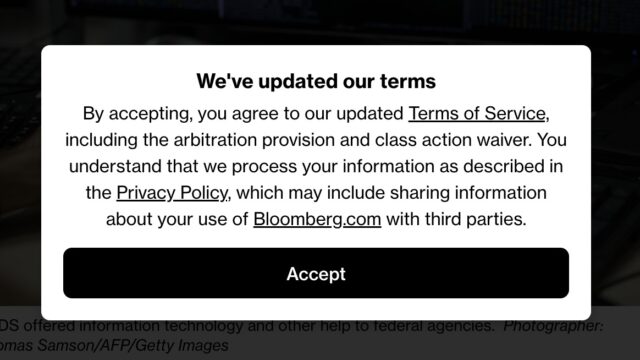
While perfectly legal, it is remarkable that to read a Bloomberg article, you must first agree to binding arbitration and waive your class action rights.
I don’t often see dialog boxes like this one. In fact, if I go to the URL of a Bloomberg.com article, I don’t see any popups: nothing about privacy, nothing about cookies,
nothing about terms of service, nothing about only being allowed to read a limited number of articles without signing up an account. I just… get… the article.
The reason for this is, most-likely, because my web browser is configured, among other things, to:
Block all third-party Javascript (thanks, uBlock Origin‘s “advanced mode”), except on domains where they’re explicitly allowed (and even then
with a few exceptions: thanks, Ghostery),
Delete all cookies 30 seconds after I navigate away from a domain, except for domains that are explicitly greylisted/allowlisted (thanks, Cookie-AutoDelete), and
But here’s the thing I’ve always wondered: if I don’t get to see a “do you accept our terms and conditions?” popup, is is still enforceable?
Obviously, one could argue that by using my browser in a non-standard configuration that explicitly results in the non-appearance of “consent” popups that I’m deliberately turning a
blind eye to the popups and accepting them by my continued use of their services1. Like: if I pour a McDonalds coffee on my lap having
deliberately worn blinkers that prevent me reading the warning that it’s hot, it’s not McDonalds’ fault that I chose to ignore their helpful legally-recommended printed warning on the cup, right?2
But I’d counter that if a site chooses to rely on Javascript hosted by a third party in order to ask for consent, but doesn’t rely on that same third-party in
order to provide the service upon which consent is predicated, then they’re setting themselves up to fail!
The very nature of the way the Internet works means that you simply can’t rely on the user successfully receiving content from a CDN. There are all kinds of reasons my browser might not
get the Javascript required to show the consent dialog, and many of them are completely outside of the visitor’s control: maybe there was a network fault, or CDN downtime, or my
browser’s JS engine was buggy, or I have a disability and the technologies I use to mitigate its impact on my Web browsing experience means that the dialog isn’t read out to me. In any
of these cases, a site visitor using an unmodified, vanilla, stock web browser might visit a Bloomberg article and read it without ever being asked to agree to their terms and
conditions.
Would that be enforceable? I hope you’ll agree that the answer is: no, obviously not!
It’s reasonably easy for a site to ensure that consent is obtained before providing services based on that consent. Simply do the processing server-side, ask for whatever
agreement you need, and only then provide services. Bloomberg, like many others, choose not to do this because… well, it’s probably a combination of developer laziness and
search engine optimisation. But my gut feeling says that if it came to court, any sensible judge would ask them to prove that the consent dialog was definitely viewed by
and clicked on by the user, and from the looks of things: that’s simply not something they’d be able to do!
tl;dr: if you want to fight with Bloomberg and don’t want to go through their arbitration, simply say you never saw or never agreed to their terms and conditions – they
can’t prove that you did, so they’re probably unenforceable (assuming you didn’t register for an account with them or anything, of course). This same recommendation applies to many,
many other websites.
Footnotes
1 I’m confident that if it came down to it, Bloomberg’s lawyers would argue
exactly this.
2 I see the plaintiff’s argument that the cups were flimsy and obviously her injuries were
tragic, of course. But man, the legal fallout and those “contents are hot” warnings remain funny to this day.













 RSS
RSS Spotify
 Pocket Casts
 Apple Podcasts
 YouTube