This site maintains a table cross-referencing the most popular “secure” messaging apps (WhatsApp, Signal, Skype etc.) against their security features, so that you can make an informed
decision.
The tl;dr is, of course, what I’ve been saying all along: use Signal! (at least until Riot is more
mature…)
In January 2016, I spent $3,000 to buy 7.4 bitcoins. At the time, it seemed an entirely worthwhile thing to do. I had recently started working as a research director at the Institute
for the Future’s Blockchain Futures Lab, and I wanted firsthand experience with bitcoin, a cryptocurrency that uses a blockchain to record transactions on its network. I had no way of
knowing that this transaction would lead to a white-knuckle scramble to avoid losing a small fortune…
Yesterday, a hacker pulled off the second biggest heist in the history of digital currencies.
Around 12:00 PST, an unknown attacker exploited a critical flaw in the Parity multi-signature wallet on the Ethereum network, draining three massive wallets of over $31,000,000 worth
of Ether in a matter of minutes. Given a couple more hours, the hacker could’ve made off with over $180,000,000 from vulnerable wallets.
Let this pledge be duly noted on the permanent record of the Internet. I don’t know if there’s an afterlife, but I’ll be finding out soon enough, and I plan to go out mad as
hell…
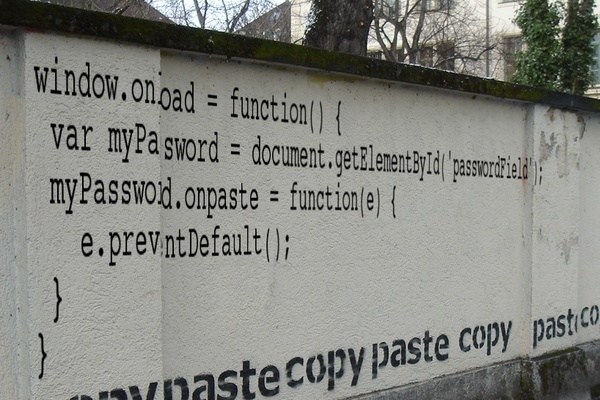
One of the things people often tweet to us @ncsc are examples of websites which prevent you pasting in a password. Why do websites do this? The debate has raged – with most
commentators raging how annoying it is.
So why do organisations do this? Often no reason is given, but when one is, that reason is ‘security’. The NCSC don’t think the reasons add up. We think that stopping password
pasting (or SPP) is a bad thing that reduces security. We think customers should be allowed to paste their passwords into forms, and that
it improves security…
In early June 2014, accountants at the Lumiere Place Casino in St. Louis noticed that several of their slot machines had—just for a couple of days—gone
haywire. The government-approved software that powers such machines gives the house a fixed mathematical edge, so that casinos can be certain of how much they’ll earn over the long
haul—say, 7.129 cents for every dollar played. But on June 2 and 3, a number of Lumiere’s machines had spit out far more money than they’d consumed, despite not awarding any major
jackpots, an aberration known in industry parlance as a negative hold. Since code isn’t prone to sudden fits of madness, the only plausible explanation was that someone was cheating…
In this post I’ll explain why quantum computers are useless to find hash function collisions, and how we can leverage this powerlessness to build post-quantum signature
schemes. I’ll then describe a quantum computing model that you can try at home, and one where hash function collisions are easy to find…
In common slang, FTW is an acronym “for the win” and while that’s appropriate here, I think a better expansion is “for the world.”
We’re pleased to announce that we have sponsored the development of TLS 1.3 in OpenSSL. As it is one of the most widely-used TLS libraries, it is a good investment for the overall
health and security of the Internet, so that everyone is able to deploy TLS 1.3 as soon as possible…
All secure crypto on the Internet assumes that the DNS lookup from names to IP addresses are insecure. Securing those DNS lookups therefore enables no meaningful security. DNSSEC does
make some attacks against insecure sites harder. But it doesn’t make those attacks infeasible, so sites still need to adopt secure transports like TLS. With TLS properly
configured, DNSSEC adds nothing…
That’s it – I’m calling it – HTTPS adoption has now reached the moment of critical mass where it’s gathering enough
momentum that it will very shortly become “the norm” rather than the exception it so frequently was in the past. In just the last few months, there’s been some really significant
things happen that have caused me to make this call, here’s why I think we’re now at that tipping point…
It’s no secret. We’re really bad at passwords. Nevertheless, they aren’t going away any time soon.
With so many websites and online applications requiring us to create accounts and think up passwords in a hurry, it’s no wonder so many of us struggle to follow the advice of
so-called password security experts.
At the same time, the computing power available for password cracking just gets bigger and bigger.
OK, so I started with the bad news, but this cloud does have a silver lining…
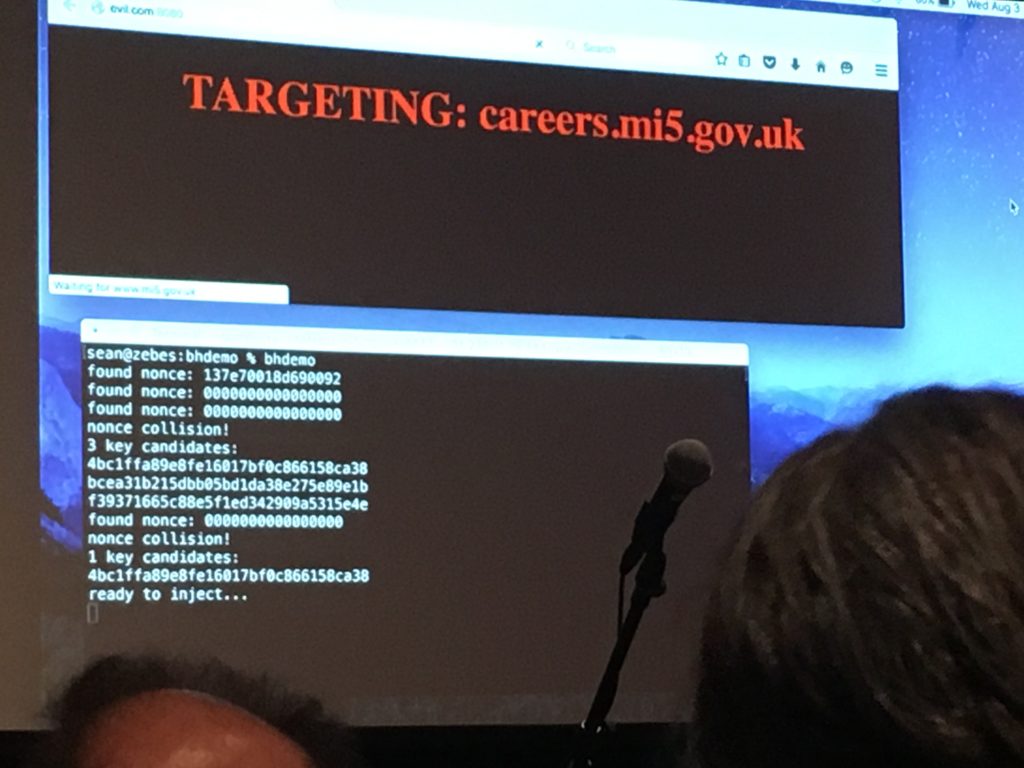
The coolest talk of this year’s Blackhat must have been the one of Sean Devlin and Hanno Böck. The talk summarized this early year’s paper, in a very cool way: Sean walked on stage
and announced that he didn’t have his slides. He then said that it didn’t matter because he had a good idea on how to retrieve them…
A cross-site scripting vulnerability (shortened to XSS, because
CSS already means other things) occurs when a website can be tricked into showing a visitor unsafe content that came from another site
visitor. Typically when we talk about an XSS attack, we’re talking about tricking a website into sending Javascript code to the user: that Javascript code can then be used to steal
cookies and credentials, vandalise content, and more.
Good web developers know to sanitise input – making anything given to their pages by a user safe before ever displaying it on a page – but even the best can forget quite how many things
really are “user input”.
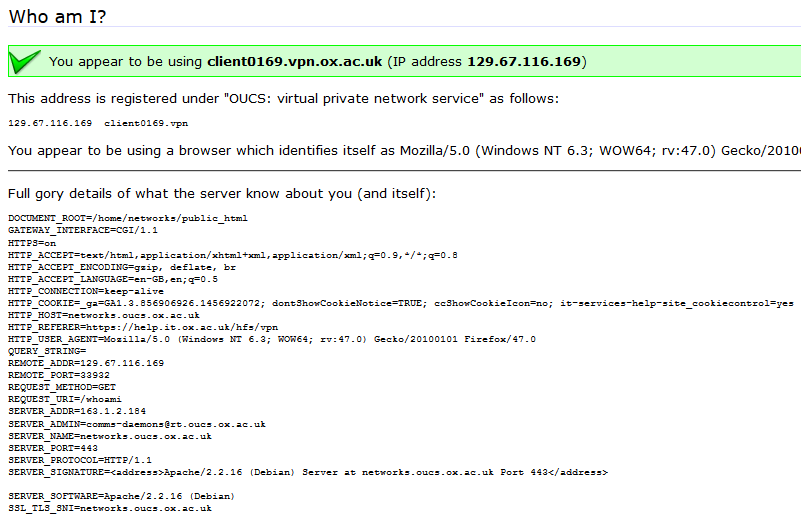
This page outputs a variety of your inputs right back at you.
Recently, I reported a vulnerability in a the University of Oxford’s IT Services‘ web pages that’s a great example of this. The page (which
isn’t accessible from the public Internet, and now fixed) is designed to help network users diagnose problems. When you connect to it, it tells you a lot of information about your
connection: what browser you’re using, your reverse DNS lookup and IP address, etc.. The developer clearly understood that XSS was a risk, because if you pass a query string to the
page, it’s escaped before it’s returned back to you. But unfortunately, the developer didn’t consider the fact that virtually anything given to you by the browser can’t be
trusted.
To demonstrate this vulnerability, I had the option of writing Perl or Javascript. For some reason, I chose Perl.
In this case, I noticed that the page would output any cookies that you had from the .ox.ac.uk domain, without escaping them. .ox.ac.uk cookies can be manipulated by anybody
who has access to write pages on the domain, which – thanks to the users.ox.ac.uk webspace – means any staff or students at the University (or, in
an escalation attack, anybody’s who’s already compromised the account of any staff member or student). The attacker can then set up a web page that sets up such a “poisoned” cookie and
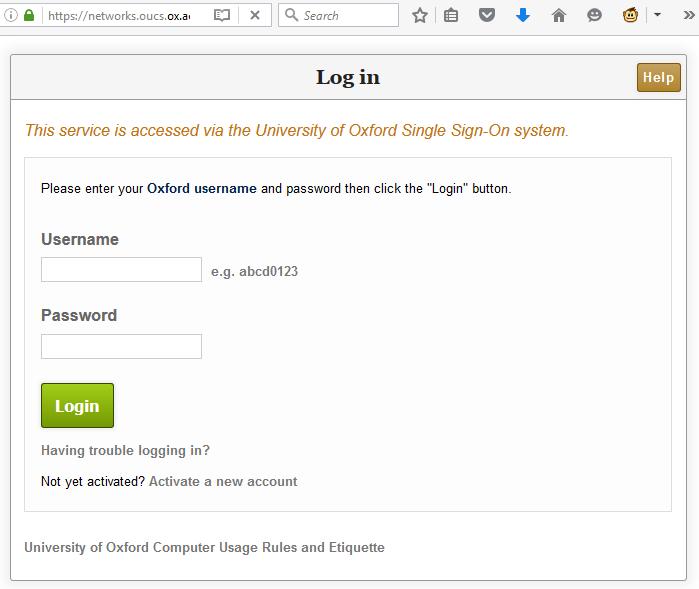
then redirects the user to the affected page and from there, do whatever they want. In my case, I experimented with showing a fake single sign-on login page, almost indistinguishable
from the real thing (it even has a legitimate-looking .ox.ac.uk domain name served over a HTTPS connection, padlock and all). At this stage, a real attacker could use a spear phishing scam to trick users into clicking a link to their page and start stealing credentials.
The padlock, the HTTPS url, and the convincing form make this page look legitimate. But it’s actually spoofed.
I’m sure that I didn’t need to explain why XSS vulnerabilities are dangerous. But I wanted to remind you all that truly anything that comes from the user’s web browser, even if
you think that you probably put it there yourself, can’t be trusted. When you’re defending against XSS attacks, your aim isn’t just to sanitise obvious user input like GET and POST
parameters but also anything that comes from a browser header including cookies and referer headers, especially if your domain name carries websites managed by many different people. In
an ideal world, Content Security Policy would mitigate all these kinds of attacks: but in our real world – sanitise
those inputs!
Here is an example scenario… You receive an email requesting a payment. It could be for rent, it could be fees for a course or any other legitimate reason. Typically, the payment is a
significant sum. The email contains the banking details you need to make the payment. Then shortly after the 1st email arrives…