My random Wikipedia article of the day was Milices Patriotiques, who were a 22,000-strong communist group and part of the Belgian resistance in the Second World War. Which sounded really interesting, but their article was tragically short so that’s pretty much all I have to say about them!
Tag: war
Wikipedia @ 25: Wesley Merritt
Podcast Version
This post is also available as a podcast. Listen here, download for later, or subscribe wherever you consume podcasts.
To celebrate the site’s 25th birthday this year, Wikipedia is encouraging/challenging people to read one Wikipedia article a day for 25 consecutive days. I felt that I could do one better than that: not only reading an article but – where I found one that was particularly interesting – to write a blog post or record a podcast episode for each of those days, sharing what I learned. For each entry, I’ll hit “random article” a few times until something catches my interest, start reading, and then start writing! Everything I’ve written below came from Wikipedia… so you should check other sources before you use it to do your homework. Happy birthday, Wikipedia!
Today’s random article: Governor-General of the Philippines
Today’s topic: Wesley Merritt
The Philippines spent a lot of modern history under colonial rule:
- First, from 1565, by the Spanish out of their Viceroyalty of New Spain (Mexico).
- Then by the British for a few years who captured it after Spain sided with France in the Seven Years War.
- Then back to Spain at the signing of the 1763 Treaty of Paris, where, when Britain was arguing which captured territories it should be allowed to keep, everybody forgot about it and so it fell into the default bucket of “back to its previous controller”: it seems that Spain hadn’t even noticed that Manilla had been captured!
- Then, after the Mexican War of Independence… still under Spain, but now directly under the Spanish crown and managed from Madrid.
- And finally, courtesy of the 1898 Treaty of Paris, under the United States (with the exception of the period during which it was occupied by Japan).
- The Philippines finally gained independence in 1946.
As you might expect if you know anything about colonialism, there are absolutely horrible stories that could be told about any of those periods of history. So when I landed on the page Governor-General of the Philippines, I decided that it might be cheerier to pick out a person from it.
And so I picked what I believe to be the person whose term as Governor-General of the Philippines was shortest: in post for just 16 days in August 1898: Wesley Merritt.
Wesley was a cavalryman in the American Civil War during which, in 1863, he managed to leapfrog three ranks by getting promoted from Captain right up to Brigadier General. After the Civil War he was posted to the Texan frontier where he commanded a cavalry regiment in the American Indian Wars. His success in… umm… “freeing up land” for American settlers (it turns out this post can’t escape from the ugliness of imperialism)… lead him to a new role in using his troops to police the civilians rushing to “claim” land formerly occupied by native Americans.
But it’s right at the end of the 19th century that his story intersects with today’s random article.
As the 19th century wore on, the world-spanning Spanish Empire came under serious threat. The Napoleonic Wars had cut Spain off from its colonies, and one by one they lost control of Mexico, Peru, Colombia, Chile, Argentina, and others (often with thanks to quiet support from Britain). But Spain had managed to keep hold of Cuba and the Philippines, despite growing unrest and uprisings, which were often brutally suppressed.
Cuba in particular was a major trade partner to the United States, and so the US tried to insert itself as a negotiator in the war between the Cuban independence movement and the Spanish crown.
At the time, the US was working to establish itself as a modern naval power, building new steel warships to compete with European powers and Brazil, and making plans for what would eventually become the Panama Canal, and so this was a perfect opportunity to show off their armoured cruiser the USS Maine.
The Maine got sent to Havana as a show of force and to protect American interests in Cuba, where, a couple of weeks later, she… blew up.
Probably what happened was that the bituminous coal stored in her bunkers was leaking methane out, which spontaneously ignited, starting a fire that ignited the ship’s powder store. But some, including Theodore Roosevelt (who was then assistant navy secretary and on his way to becoming vice-president) and much of the popular press, claimed that the ship must have been struck by a Spanish mine or torpedo.
The next month, after Congress had had a chance to discuss the matter (do you remember when the US Congress used to have to be involved in the US declaring war on another country?), the US declared war on Spain and began actively attacking her fleets and colonies in the Caribbean and the Pacific.
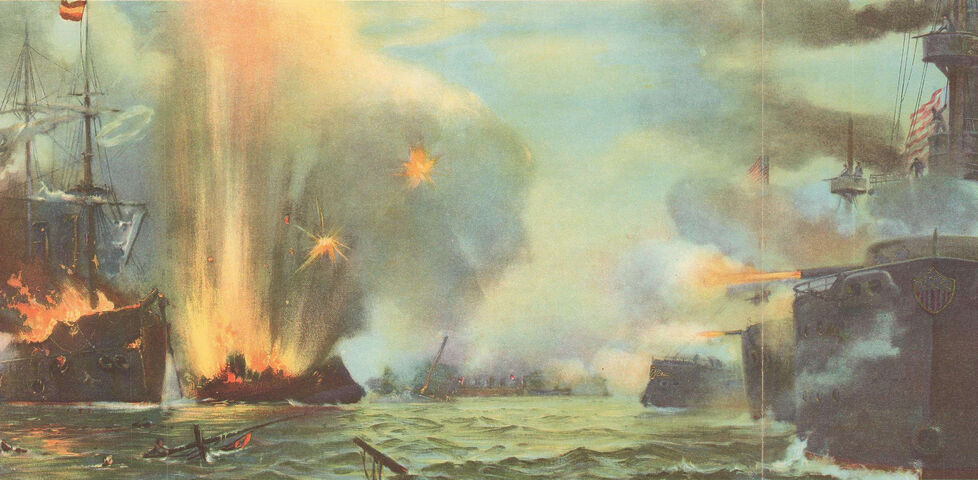
The US fleet steamed into Manilla Bay for what might be the most one-sided naval battle ever. The Spanish fleet at Manilla would have been severely outmatched even were it not for the fact that the second-lead ship was unpowered, the shore batteries’ range was insufficient to be involved, and the mines had been placed suboptimally. Only a single American sailor lost his life in the battle, and it was apparently as a result of a heart attack.
Okay, we’re at last up to Wesley Merritt‘s bit. Merritt was placed in command of the ground forces that were tasked with capturing Manilla. They sailed out of San Francisco, landed in the Philippines, and prepared to attack the city.
Merritt and Admiral Dewey made a point not to coordinate with Emilio Aguinaldo y Famy, the leader of the Filipino resistance against the Spanish, who by this point had already taken control of most of the Philippines and besieged Manilla, cutting off its water supply and beginning negotiations with the local Spanish leaders. It seems that Americans feared that if the revolutionaries captured the city it would result in significant bloodshed as a result of violent looting and the murder of those who were seen to have collaborated with the Spanish, and so they came up with an alternative plan: the American expeditionary force would attack and capture the city first!
Working through the Belgian consul to Manilla Édouard André, Merritt negotiated with the Spanish Governor-General Fermín Jáudenes to arrange a “mock” battle. The ships in the bay would fire upon a fort that they knew was only used for storage and against defensive walls that they knew they were not capable of breaching, and Spanish troops would be ordered to retreat as Merritt’s soldiers advanced. Then, Merritt would demand that the Spanish surrender the city, and they would comply, turning it over to the American forces.
This would minimise casualties while allowing the Spanish Governor-General to avoid the shame of being seen to have lost the city to the revolutionaries (it being far more politically-acceptable to lose to the might of the American invaders). Meanwhile, Aguinaldo’s troops initially saw the battle as genuine, which led to some casualties as Filipino fighters advanced under fire; they joined the victims of other misunderstandings during the mock battle.
Needless to say, the Filipinos deeply resented being told to stay out of the capital city that, given time, they might well have taken for themselves by force, had their efforts not been leapfrogged by the USA. Ultimately this lead to a guerilla warfare campaign against the USA by Philippine nationalists, which in turn contributed to growing concern in US political circles that America was becoming exactly the kind of imperialist power that it had opposed, at least on paper, since its founding.
Anyway: on 13 August 1898 Wesley Merritt became the de facto Governor-General of the Philippines and the first American to hold that position. Two weeks later Major General Elwell Stephen Otis turned up and relieved him of the position, making Merritt the shortest ever Governor-General of the Philippines.
Merritt retired the next year and lived ten more years.
Anyway: that’s enough of today’s history lesson courtesy of a random Wikipedia page. I wonder what I’ll learn tomorrow! (If it’s as-interesting, I’ll let you know!)
Note #26938
Bletchley Park
The eldest is really getting into her WW2 studies at school, so I arranged a trip for her and a trip to the ever-excellent Bletchley Park for a glimpse at the code war that went on behind the scenes. They’re clearly looking forward to the opportunity to look like complete swots on Monday.
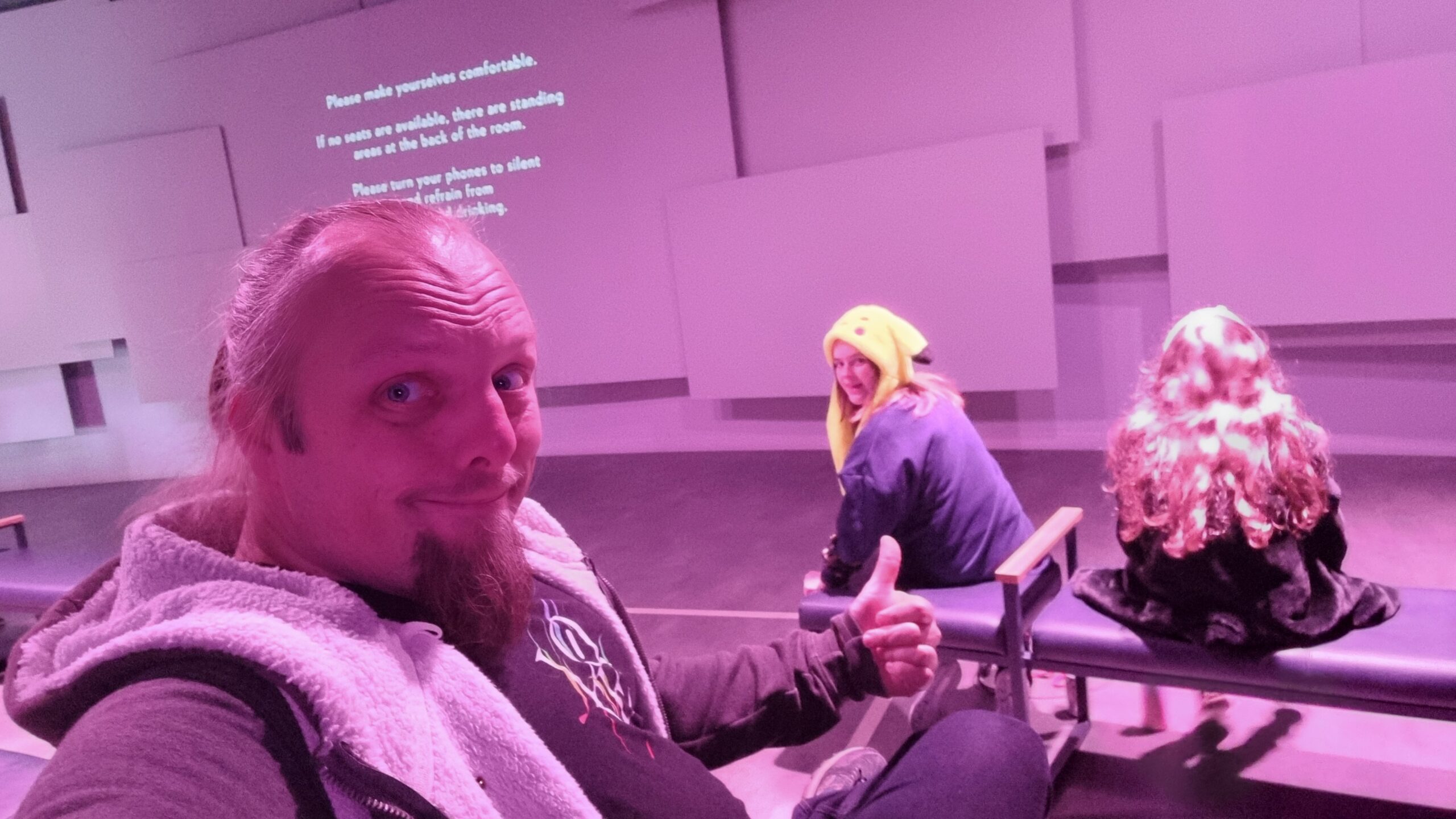
Bonus: I got to teach them some stories about some of my favourite cryptanalysts. (Max props to the undersung Mavis Batey!)
How the Knights Hospitaller ‘accidentally’ became a major European air power
This is a repost promoting content originally published elsewhere. See more things Dan's reposted.
Sod Pepsi’s navy.Let’s talk about the point after WW2 where the Knights Hospitaller, of medieval crusading fame, ‘accidentally’ became a major European air power.
I shitteth ye not. ?️?️
So, if I asked you to imagine the Knights Hospitaller you probably picture:1) Angry Christians on armoured horses
2) Them being wiped out long ago like the Templars.
3) Some Dan Brown bullshitAnd you would be (mostly) wrong about all three. Which is sort of how this happened.
From the beginning (1113 or so), the Hospitallers were never quite as committed to the angry, horsey thing as the Templars. They had always (ostensibly) been more about protecting pilgrims and healthcare.They also quite liked boats. Which were useful for both.
Over the next 150 years (or so), as the Christian grip on the Holy Lands waned, both military orders got more involved in their other hobbies – banking for the Templars, mucking around in boats for the Hospitaller.This proved to be a surprisingly wise decision on the Hospitaller part. By 1290ish, both Orders were homeless and weakened.As the Templars fatally discovered, being weak AND having the King of France owe you money is a bad combo.
Being a useful NAVY, however, wins you friends.
And this is why your first vision of the Hospitallers is wrong. Because they spent the next 500 YEARS, backed by France and Spain, as one of the most powerful naval forces in the Mediterranean, blocking efforts by the Ottomans to expand westwards by sea.To give you an idea of the trouble they caused: in 1480 Mehmet II sent 70,000 men (against the Knights 4000) to try and boot them out of Rhodes. He failed.Suleiman the Magnificent FINALLY managed it in 1522 with 200,000 men. But even he had to agree to let the survivors leave.
The surviving Hospitallers hopped on their ships (again) and sailed away. After some vigorous lobbying, in 1530 the King of Spain agreed to rent them Malta, in return for a single maltese falcon every year.Because that’s how good rents were pre-housing crisis in Europe.
The Knights turned Malta into ANOTHER fortified island. For the next 200 years ‘the Pope’s own navy’ waged a war of piracy, slavery and (occasionally) pitched sea battles against the Ottomans.From Malta, they blocked Ottoman strategic access to the western med. A point that was not lost on the Ottomans, who sent 40,000 men to try and take the island in 1565 – the ‘Great Siege of Malta’.The Knights, fighting almost to the last man, held out and won.
Now the important thing here is the CONTINUED EXISTENCE AS A SOVEREIGN STATE of the Knights Hospitaller. They held Malta right up until 1798, when Napoleon finally managed to boot them out on his way to Egypt.(Partly because the French contingent of the Knights swapped sides)
The British turned up about three months later and the French were sent packing, but, well, It was the British so:THE KNIGHTS: Can we have our strategically important island back please?
THE BRITISH: What island?
THE KNIGHT: That island
THE BRITISH: Nope. Can’t see an islandAfter the Napoleonic wars no one really wanted to bring up the whole Malta thing with the British (the Putin’s Russia of the era) so the European powers fudged it. They said the Knights were still a sovereign state and they tried to sort them out with a new country. But never didThe Russian Emperor let them hang out in St Petersburg for a while, but that was awkward (Catholicism vs Orthodox). Then the Swedes were persuaded to offer them Gotland.But every offer was conditional on the Knights dropping their claim to Malta. Which they REFUSED to do.
~ wobbly lines ~It’s the 1900s. The Knights are still a stateless state complaining about Malta. What that means legally is a can of worms NO ONE wants to open in international law but they’ve also rediscovered their original mission (healthcare) so everyone kinda ignores them
The Knights become a pseudo-Red Cross organisation. In WW1 they run ambulance trains and have medical battalions, loosely affiliated with the Italian army (still do). In WW2 they do it too.Italy surrenders. The allies move on then…
Oh dear.
Who wrote this peace deal again?
It turns out the Treaty of Peace with Italy should go FIRMLY into the category of ‘things that seemed a good idea at the time’.This is because it presupposes that relations between the west and the Soviets will be good, and so limits Italy’s MILITARY.
This is a problem.
Because as the early Cold War ramps up, the US needs to build up its Euro allies ASAP.But the treaty limits the Italians to 400 airframes, and bans them from owning ANYTHING that might be a bomber.
This can be changed, but not QUICKLY.
Then someone remembers about the Knights
The Knights might not have any GEOGRAPHY, but because everyone avoided dealing with the tricky international law problem it can be argued – with a straight face – that they are still TECHNICALLY A EUROPEAN SOVEREIGN STATE.And they’re not bound by the WW2 peace treaty.
Italy (with US/UK/French blessing) approaches the Knights and explains the problem.The Knights reasonably point out that they’re not in the business of fighting wars anymore, but anything that could be called a SUPPORT aircraft is another matter.
So, in the aftermath of WW2, this is the ballet that happens:The Italians transfer all of their support and training aircraft to the Knights.
This then frees up the ‘cap room’ to allow the US to boost Italy’s warfighting ability WITHOUT breaking the WW2 peace treaty.
And that’s how the Knights Hospitaller ended up becoming a major air power.Eventually the treaties were reworked, and everything was quietly transferred back. I suspect it’s a reason why the sovereign status of the Knights remains unchallenged still today though.
And that’s why today, even thought they are now fully committed to the Red-Cross-esque stuff, they can still issue passports, are a permanent observer at the UN, have a currency…..,and even have a tiny bit of Malta back.
Nazi spies awarded fake medals after war by their MI5 controller
This is a repost promoting content originally published elsewhere. See more things Dan's reposted.
Two fascist spies were awarded fake Nazi medals after the end of the second world war by an MI5 officer who penetrated their secret network, a newly published book on wartime espionage has revealed.
Copies of German bronze honours for non-combat gallantry were commissioned from the Royal Mint and presented at a covert ceremony in January 1946 to both British citizens by Eric Roberts, a former bank clerk who spent years impersonating a Gestapo officer.
…
I love this. It’s the obvious end to the Double Cross system: giving the unwitting double agents you’ve turned fake medals “from” their own country so that they’re still in the dark about the fact that their handler isn’t on their side!
What Cyber-War Will Look Like
This is a repost promoting content originally published elsewhere. See more things Dan's reposted.
When prompted to think about the way hackers will shape the future of great power war, we are wont to imagine grand catastrophes: F-35s grounded by onboard computer failures, Aegis BMD systems failing to launch seconds before Chinese missiles arrive, looks of shock at Space Command as American surveillance satellites start careening towards the Earth–stuff like that. This is the sort of thing that fills the opening chapters of Peter Singer and August Cole’s Ghost Fleet. [1] The catastrophes I always imagine, however, are a bit different than this. The hacking campaigns I envision would be low-key, localized, and fairly low-tech. A cyber-ops campaign does not need to disable key weapon systems to devastate the other side’s war effort. It will be enough to increase the fear and friction enemy leaders face to tip the balance of victory and defeat. Singer and company are not wrong to draw inspiration from technological change; nor are they wrong to attempt to imagine operations with few historical precedents. But that isn’t my style. When asked to ponder the shape of cyber-war, my impulse is to look first at the kind of thing hackers are doing today and ask how these tactics might be applied in a time of war.
Mark Cancian thinks like I do.
In a report Cancian wrote for the Center for Strategic and International Studies on how great powers adapt to tactical and strategic surprise, Cancian sketched out twelve “vignettes” of potential technological or strategic shocks to make his abstract points a bit more concrete. Here is how Cancian imagines an “asymmetric cyber-attack” launched by the PRC against the United States Military:
The U.S. secretary of defense had wondered this past week when the other shoe would drop. Finally, it had, though the U.S. military would be unable to respond effectively for a while.
The scope and detail of the attack, not to mention its sheer audacity, had earned the grudging respect of the secretary. Years of worry about a possible Chinese “Assassin’s Mace”-a silver bullet super-weapon capable of disabling key parts of the American military-turned out to be focused on the wrong thing.
The cyber attacks varied. Sailors stationed at the 7th Fleet’ s homeport in Japan awoke one day to find their financial accounts, and those of their dependents, empty. Checking, savings, retirement funds: simply gone. The Marines based on Okinawa were under virtual siege by the populace, whose simmering resentment at their presence had boiled over after a YouTube video posted under the account of a Marine stationed there had gone viral. The video featured a dozen Marines drunkenly gang-raping two teenaged Okinawan girls. The video was vivid, the girls’ cries heart-wrenching the cheers of Marines sickening And all of it fake. The National Security Agency’s initial analysis of the video had uncovered digital fingerprints showing that it was a computer-assisted lie, and could prove that the Marine’s account under which it had been posted was hacked. But the damage had been done.
There was the commanding officer of Edwards Air Force Base whose Internet browser history had been posted on the squadron’s Facebook page. His command turned on him as a pervert; his weak protestations that he had not visited most of the posted links could not counter his admission that he had, in fact, trafficked some of them. Lies mixed with the truth. Soldiers at Fort Sill were at each other’s throats thanks to a series of text messages that allegedly unearthed an adultery ring on base.
The variations elsewhere were endless. Marines suddenly owed hundreds of thousands of dollars on credit lines they had never opened; sailors received death threats on their Twitter feeds; spouses and female service members had private pictures of themselves plastered across the Internet; older service members received notifications about cancerous conditions discovered in their latest physical.
Leadership was not exempt. Under the hashtag # PACOMMUSTGO a dozen women allegedly described harassment by the commander of Pacific command. Editorial writers demanded that, under the administration’s “zero tolerance” policy, he step aside while Congress held hearings.
There was not an American service member or dependent whose life had not been digitally turned upside down. In response, the secretary had declared “an operational pause,” directing units to stand down until things were sorted out.
Then, China had made its move, flooding the South China Sea with its conventional forces, enforcing a sea and air identification zone there, and blockading Taiwan. But the secretary could only respond weakly with a few air patrols and diversions of ships already at sea. Word was coming in through back channels that the Taiwanese government, suddenly stripped of its most ardent defender, was already considering capitulation.[2]
How is that for a cyber-attack?
…
The Pig War of 1859
This is a repost promoting content originally published elsewhere. See more things Dan's reposted.
Undeniably one of the most obscure and unusual 'wars' in history, this is the story of how the killing of an escaped pig almost caused a war between the United States and Britain.
‘The Pig War’ is perhaps one of the most obscure and unusual wars in history. The story begins back in 1846 when the Oregon Treaty was signed between the US and Britain. The treaty aimed to put to rest a long standing border dispute between the US and British North America (later to be Canada), specifically relating to the land between the Rocky Mountains and the Pacific coastline.
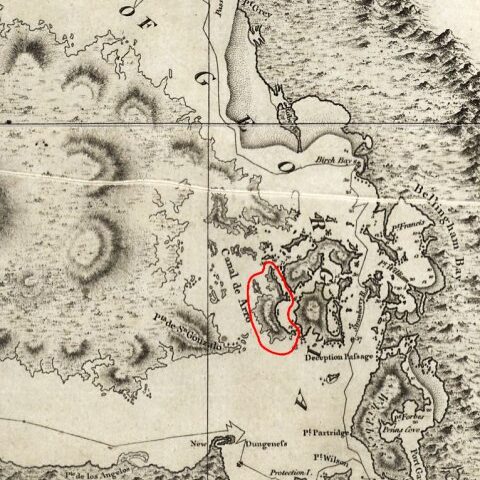
The Oregon Treaty stated that the US / British American border be drawn at the 49th parallel, a division which remains to this day. Although this all sounds rather straightforward, the situation because slightly more complicated when it came to a set of islands situated to the south-west of Vancouver. Around this region the treaty stated that the border be through ‘the middle of the channel separating the continent from Vancouver’s Island.’ As you can see from the map below, simply drawing a line through the middle of the channel was always going to be difficult due to the awkward positioning of the islands.
…
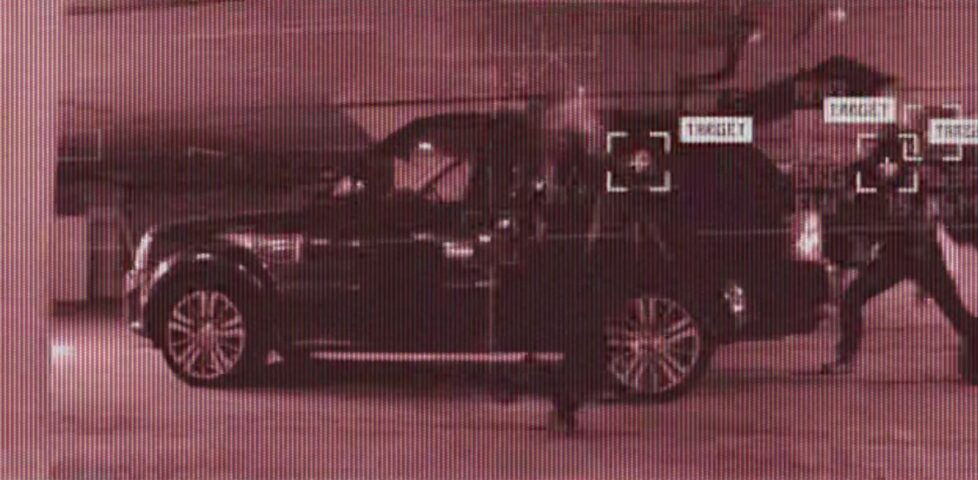
Slaughterbots
This is a repost promoting content originally published elsewhere. See more things Dan's reposted.
The First Time I Met Americans
This is a repost promoting content originally published elsewhere. See more things Dan's reposted.
HANOI, Vietnam — I first visited the United States in the summer of 1998, when I was invited to attend a literary conference in Montana with four other Vietnamese writers. We flew from Hanoi to Taiwan to Los Angeles. As we crossed the Pacific Ocean, passing through many time zones, I buried myself in sleep and woke up only when the plane hit the tarmac. At passport control, we found ourselves in a huge hall, and I was abruptly taken aback: There were Americans all around us, lots of them! I will never forget that strange feeling. It was bizarre, unbelievable, surreal, that I, a veteran of the Vietnamese People’s Army, was in the United States, surrounded by Americans.
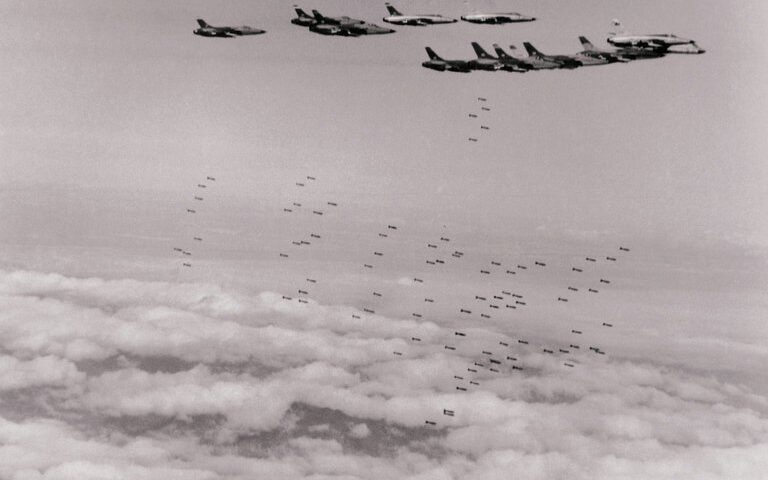
The first time I ever saw Americans was when I was 12 years old. It wasn’t actually blond-haired, blue-eyed Americans that I was seeing up close. The Americans I saw that day were F-4 Phantom bombers, brutally attacking small towns on the shore of Ha Long Bay. It was Aug. 5, 1964, and I was at the beach on a school trip, swimming with my classmates. That was right after the Tonkin Gulf incident, the day President Lyndon B. Johnson announced his decision to expand the war throughout Vietnam…
TIL that early in the second world war, Churchill (anticipating trench warfare stalemates as in the first world war) commissioned the invention of a “mole” machine that could dig new trenches to take itself and a convoy of tanks deep into the enemy lines.
This link was originally posted to /r/todayilearned. See more things from Dan's Reddit account.
The original link was: https://en.wikipedia.org/wiki/Cultivator_No._6
Going to a memorial service today? Help update the national record of your war memorial.
This self-post was originally posted to /r/unitedkingdom. See more things from Dan's Reddit account.
Since 1989, the War Memorials Archive has been trying to keep an up-to-date database for everybody to read, showing the location of every war memorial in the UK as well of details of the dead commemorated there. But their records are incomplete, and sadly many memorials (especially rural ones) are degrading: someday the information on them may be lost.
You can help, and it’s really easy. First, find your nearest local war memorial at http://www.ukniwm.org.uk/server/show/nav.23 – just search in your town or village and you’ll find one. See if it appears and if the information is complete: some records barely show that the memorial is there, others have full lists of names, but many are in-between, merely listing which wars are represented.
Then head out to the memorial and take photos of all sides of it, close enough that you can read all of the text. In the top right corner of the page about your town’s memorial, there’s a link to provide updated information: just type in the new details that you found and send it off. Or, if your memorial wasn’t in the database at all, send them an email.
This Remembrance Sunday you can do more for the memory of those killed in war by helping future generations remember and research, too. Thanks for your help.
Jersey
A couple of weeks ago – and right at the end of the incredibly-busy development cycle that preceded Three Rings‘ Milestone: Krypton – Ruth, JTA and I joined Ruth’s mother on a long-weekend trip to the island of Jersey. I’d been to the Channel Islands only once before (and that was spent primarily either in the dark and the rain, or else in the basement meeting room of a hotel: I was there on business!), so I was quite pleased to get the chance to visit more “properly”.
Of particular interest was the history of the island during the Second World War. Hitler had been particularly pleased to have captured British territory (after the islands, which were deemed undefensible by the British, had been demilitarised), and felt that the Channel Islands were of critical military significance. As a result, he commanded that a massive 10% of the steel and concrete of the Atlantic Wall project should be poured into the Islands: Jersey was, as a result, probably more heavily-fortified than the beaches of Normandy. In the end, this impregnable island fortress was left until last – Berlin fell before Jersey and Guernsey were liberated – and this was a factor in the great suffering of the islanders during the occupation. We visited the “war tunnels“, a massive underground complex built by the German defenders, and it was one of the most spectacular wartime museums I’ve ever experienced.
The tunnels are, of course, an exhibit in themselves – and that’s what I expected to see. But in actual fact, the care and attention that has gone into constructing the museum within is breathtaking. Starting with a history of the islands (in a tunnel filled with the music and postcards of the 1930s), you can just about hear the sounds of war, echoing distantly from the next chamber. There, you walk through a timeline of the invasions of Poland, Denmark, Norway and France, and see how – even with the enemy just barely over the horizon – Jersey still marketed itself as a holiday destination for Britons: a place to escape from wartime fears. Then comes the evacuation – the entire population given barely a day to decide whether they’re staying (and doubtless being occupied by Germany) or leaving (and never knowing when or if they’ll return to their homes). And then, the story of the occupation: framed in a wonderfully “human” context, through exhibits that engage with the visitor through storytelling and hypothetical questions: what would you do, under German occupation?
Certain to ensure that the whole trip didn’t turn into an educational experience, we played a fabulous round of adventure golf under the glorious sunshine of the Channel Islands. I did ever so well, up until the moment where I lost my ball and, swiftly afterwards, my ability to play the game in any meaningful capacity whatsoever. Eventually, Ruth and I tied, with JTA just a little behind… but we were all quite-embarrassingly well over par.
Jersey is apparently moderately famous for its zoo. Ruth’s mother had apparently been looking forward to visiting it for years, and – despite it only being of a modest size – had opted to spend an entire day there, and considered taking another half-day, too. Once the rest of us caught up with her there, we certainly had to agree that it was a pretty impressive zoo.
I was particularly pleased to visit their pair of very active young komodo dragons, their bat cave, their tortoises, and their remarkable aye-ayes – Jersey hosts one of very few successful captive aye-aye exhibits anywhere in the world (and let’s face it, aye-ayes are a fascinating enough species to begin with).
Ruth, her mother and I also got out for a little geocaching, an activity that I’d somewhat neglected since last summer. It turns out that there’s quite an active community on the island, and there were loads of local caches. We hit Not much room? first, which turns out to be among the best cache containers I’ve ever seen (spoilers below; skip the remaining photos if you’re ever likely to go ‘caching on Jersey), and certainly a worthy find for my 100th!
Later, we set out for View over St Aubins (which I’m sure must have been at a great viewpoint, once, until the trees grew taller and cut off the view), and a quite-enjoyable puzzle cache called Dear Fred… all in all, a great excuse to stretch our legs and to see a little more of the island than we might otherwise have.
I’m pretty sure I spent most of the holiday, though, catching up on sleep (interspersed with tiny bits of Three Rings work as we came to the tail end of the testing period – the WiFi at our B&B was, by-now-unsurprisingly, faster than that which we get at home). Or drinking. Or one, then the other. After a hard run of Three Rings development, coupled with “day job” work and the ongoing challenge of buying a house, I was pleased to be chilling out and relaxing, for a change.
Most-importantly, I reflected as we passed back through airport security on our way back to the mainland, nobody felt the need to kill anybody else the entire trip. Ruth’s mother and I, for example, haven’t always seen eye to eye (something about me ‘stealing’ Ruth from a life of monogamy, or otherwise being a bad influence, might have been an early issue), and it’s not unknown for relations to be strained between her and her daughter or her and her son-in-law, either. But even as we bickered our way through the departures lounge at Jersey Airport, at least I knew that we’d all survived.
All things considered, then: a successful trip. Fun times were had, lots of exciting history was learned, tortoises were prodded, and nobody killed anybody else, however much they might have been tempted.
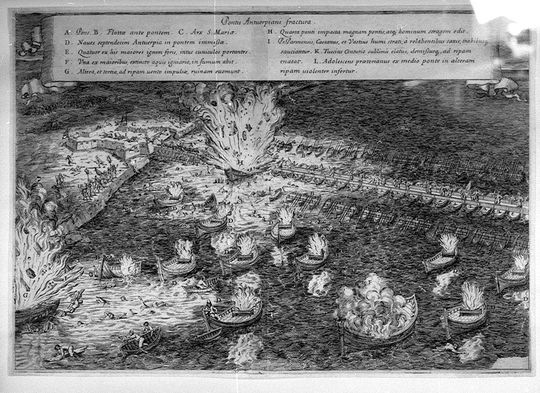
TIL that ‘Hellburners’, 16th century fire-ships filled with decks of gunpowder sandwiched between bricks and tombstones, are considered to be an early WMD.
This link was originally posted to /r/todayilearned. See more things from Dan's Reddit account.
The original link was: https://en.wikipedia.org/wiki/Hellburners
Hellburners (Dutch: hellebranders) were specialised fireships used in the Siege of Antwerp (1584-1585) during the Eighty Years’ War between the Dutch rebels and the Habsburgs. They were floating bombs, also called “Antwerp Fire”, and did immense damage to the Spanish besiegers. Hellburners have been described as an early form of weapons of mass destruction.
Wikipedia
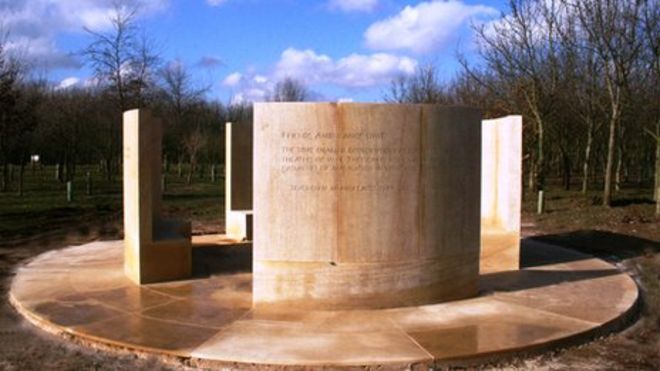
Memorial to Quakers’ wartime service
This link was originally posted to /r/Quakers. See more things from Dan's Reddit account.
The original link was: http://www.bbc.co.uk/news/uk-england-stoke-staffordshire-22220232
A memorial recognising the wartime work done by Quakers has been unveiled at the National Memorial Arboretum in Staffordshire.
Quaker beliefs, among them pacifism, meant that many were unable to serve in the armed forces during wartime.
Many volunteered to serve in warzones in the Friends Ambulance Unit (FAU).
Leslie Steed, 94, from Birmingham, who served with the FAU during World War II, said: “I would rather have been killed than kill somebody.”
…